Signs Your Annual Health Fair Has Outlived Its Value
Red flags that your legacy health fair is underperforming, plus annual health fair alternatives that deliver better reach, data, and ROI for benefits teams.
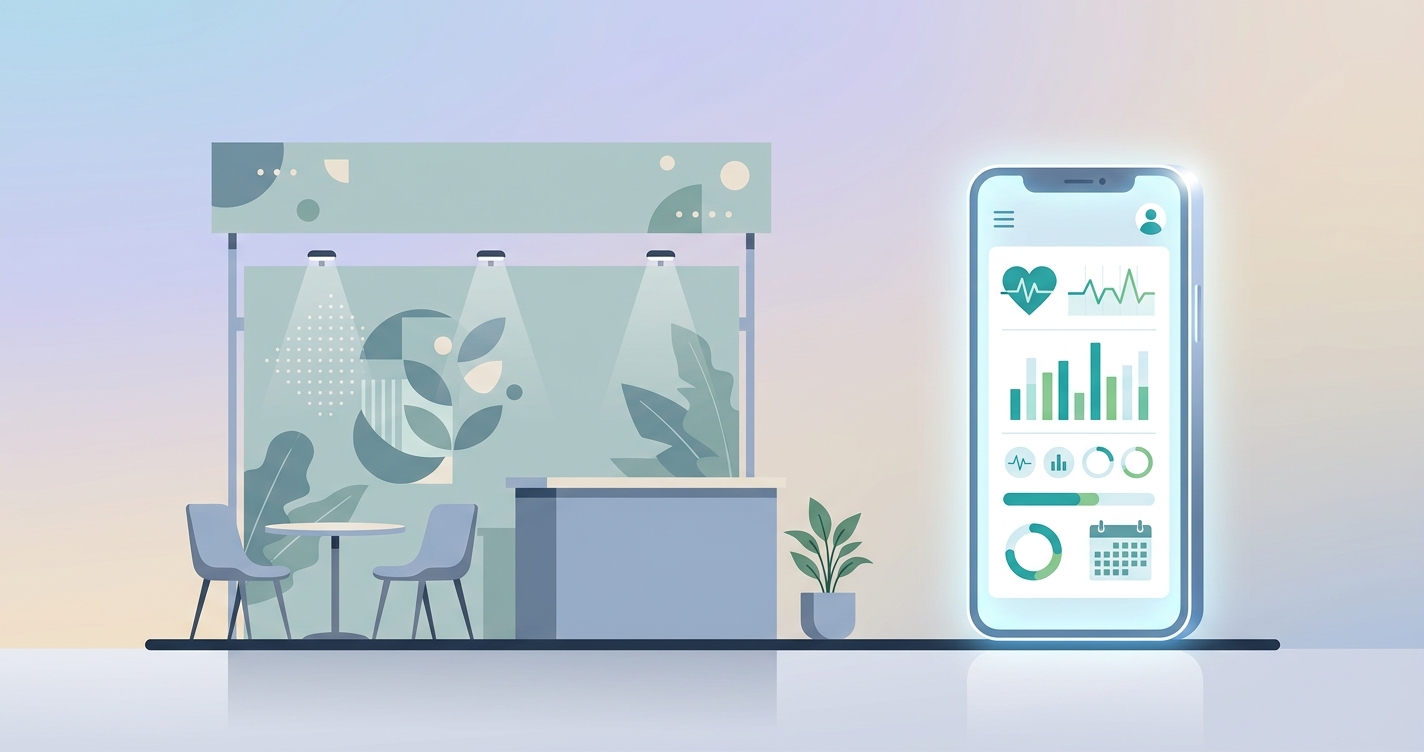
The annual health fair was built for a workplace that no longer exists. It assumed everyone reported to one building, could spare an hour mid-shift, and would happily roll up a sleeve in a converted conference room. For a while it worked, or at least it looked like it worked. But the gap between the booths set up in the lobby and the health outcomes a benefits team can actually report on has widened to the point where many programs are paying full price for a fraction of the value. If your renewal conversations keep circling back to flat participation and thin data, it is worth taking a hard look at annual health fair alternatives before you sign the same vendor contract for another year.
"On average, medical costs fall by about $3.27 for every dollar spent on wellness programs," wrote Katherine Baicker, David Cutler, and Zirui Song in their widely cited Harvard analysis published in Health Affairs (2010). The figure is real, but later randomized research showed those returns depend almost entirely on whether the program actually reaches and changes behavior, not on whether an event takes place.
Reading the red flags: when annual health fair alternatives become the smarter bet
The strongest argument for annual health fair alternatives is rarely ideological. It shows up in the numbers a wellness director already has on hand. Industry participation benchmarks place average wellness program engagement between 23% and 32%, and onsite events frequently land at the low end of that range because attendance is gated by physical presence, scheduling, and willingness to be screened in a semi-public setting. When three-quarters of an eligible population never walks through the door, the event is not a screening program. It is a sampling exercise with a catering bill.
A few red flags signal that a legacy health fair has stopped earning its keep:
- Participation has plateaued or declined for two or more consecutive years despite incentives.
- Remote, hybrid, and deskless employees are structurally excluded because they cannot attend an onsite day.
- The data arrives weeks later as a static PDF that no one acts on before the next renewal.
- Per-participant cost climbs every year while the participant count stays flat.
- Health fair ROI is asserted in the proposal but never measured against your own claims experience.
- Employees describe the event as a transactional hoop tied to a premium discount rather than a health benefit.
Any one of these is tolerable. Three or more usually means the format, not the vendor, is the problem.
Comparing the legacy model with modern wellness screening
The table below maps a traditional onsite health fair against two common replacements: a mailed lab kit model and a smartphone-based digital biometric screening approach. The point is not that events have no value, but that the cost-to-reach math has shifted decisively.
| Factor | Onsite Health Fair | Mailed Lab Kit | Digital / Phone-Based Screening |
|---|---|---|---|
| Typical participation | Low to moderate (23-32%) | Moderate, kit return varies | Higher, no location barrier |
| Reaches remote and deskless staff | Poor | Moderate | Strong |
| Time to results | Days to weeks | Days to weeks | Minutes to days |
| Per-employee cost trend | Rising with logistics | Moderate, shipping bound | Lower at scale |
| Scheduling burden on HR | High | Low | Low |
| Repeatable through the year | No, single event | Limited | Yes, on demand |
| Data format | Static report | Lab portal | Structured, exportable dashboard |
Why the economics stopped working
Health fairs carry costs that rarely appear on the headline invoice. Booking nurses or phlebotomists, reserving and staffing space, lab processing, biohazard handling, and the internal hours spent promoting attendance all stack up. When those fixed costs are divided across a shrinking pool of attendees, effective health fair ROI erodes even if the sticker price holds steady.
Replacing health fairs with a model that scales by enrollment rather than by event logistics changes the unit economics. Three structural advantages drive the shift:
- Reach is decoupled from geography, so a 4,000-person workforce spread across forty sites is no harder to screen than one headquarters.
- Marginal cost per additional participant approaches zero, which rewards higher engagement instead of penalizing it.
- Data is captured in a structured, exportable form, so benefits teams can segment risk and target follow-up rather than filing a report.
Industry applications for modern wellness screening
Benefits brokers and consultants
For brokers, the health fair has become a commodity line item that does little to differentiate a renewal pitch. Modern wellness screening offers a more defensible story: measurable reach, real engagement data, and a path to tie program design back to claims trends. Leading with annual health fair alternatives lets a broker reframe the conversation from "What did the event cost?" to "What population did we actually touch, and what did we learn?"
Distributed and deskless employers
Manufacturing, logistics, retail, and field-service employers have always struggled with onsite events because the people who most need screening cannot leave a line, a route, or a store floor. A phone-based or at-home model meets those workers where they are, which is the only way to move participation among populations that legacy fairs systematically miss.
Mid-market HR teams
Smaller benefits teams feel the administrative drag of an event most acutely. The promotion, the scheduling, the chasing of no-shows, and the post-event reconciliation consume hours that a lean department cannot spare. Shifting to a self-service screening model returns that time while widening the funnel of participants.
Current research and evidence
The evidence base for traditional workplace wellness is more cautious than vendor brochures suggest. The Illinois Workplace Wellness Study, a randomized controlled trial led by Damon Jones, David Molitor, and Julian Reif and published in the Quarterly Journal of Economics (2019), followed roughly 4,800 employees and found no significant effects on medical spending, productivity, or most health outcomes within the study window. A separate large randomized evaluation by Zirui Song and Katherine Baicker, published in JAMA (2019), found improvements in self-reported behaviors but no significant differences in clinical biometrics or health spending after 18 months.
The throughline across this research is engagement. Programs that only reach the already-healthy and already-engaged cannot move population-level metrics, because the people driving cost are the ones who never attend. That is precisely the weakness of an event tied to physical attendance. At the same time, the ROI literature remains optimistic on paper: industry surveys report that 95% of companies measuring wellness ROI in 2024 cited positive returns, up from 90% in 2023, and roughly 74% of organizations planned to increase wellness spending in 2025. The tension between rigorous trials and self-reported ROI is itself a reason to demand reach and measurement rather than a once-a-year ritual.
The future of health fair alternatives
The trajectory points toward continuous, data-rich screening that runs in the background of the benefits year rather than spiking once on a calendar. Three developments are shaping what comes next:
- Smartphone-based capture is lowering the barrier to a first measurement, turning screening into something an employee can complete in minutes rather than a half-day commitment.
- Year-round cadence is replacing the single event, so risk can be flagged and acted on when it appears instead of months later.
- Integration with broader benefits data is making screening a feeder into navigation, coaching, and condition management rather than a standalone snapshot.
None of this eliminates the human side of wellness. It relocates the budget from logistics to outcomes, and it gives benefits teams the one thing a lobby full of booths never could: a complete, current, and actionable picture of the population they are paid to manage.
Frequently asked questions
How do I know if my health fair is actually underperforming? Start with participation trend and cost per participant over the last two to three years. If attendance is flat or falling while per-head cost rises, and if remote or deskless staff are largely absent, the format is constraining your results. Pair that with whether the data ever drives action before renewal. If it does not, the event is generating activity rather than value.
What are the most common annual health fair alternatives? The two leading replacements are mailed lab kits and digital or smartphone-based biometric screening. Kits remove the location barrier but depend on return rates and shipping. Phone-based models go further by capturing measurements remotely and delivering structured data quickly, which tends to lift participation among populations that onsite events miss.
Does replacing health fairs hurt employee engagement? Usually the opposite. Engagement on legacy events is capped by who can physically attend. Removing the location and scheduling barriers widens the pool, and a year-round cadence keeps health top of mind instead of compressing it into a single day that most people skip.
How should I measure health fair ROI fairly? Measure reach first, then outcomes. Track the share of the eligible population actually screened, the cost per completed screening, and whether flagged risks led to follow-up. Tie those to your own claims and absenteeism data over time rather than relying on a vendor's generic savings multiplier.
Circadify is building toward exactly this shift, helping benefits teams replace expensive onsite events with screening employees can complete from their phone while giving programs the structured data legacy fairs never delivered. If you are weighing annual health fair alternatives for the coming plan year, you can see how a modern model works in an enterprise wellness demo.