How do I pass my employer's biometric screening without leaving my desk?
Learn how you can complete workplace biometric screening from home. Discover the technology that replaces clinic visits with a 30-second scan from your phone.
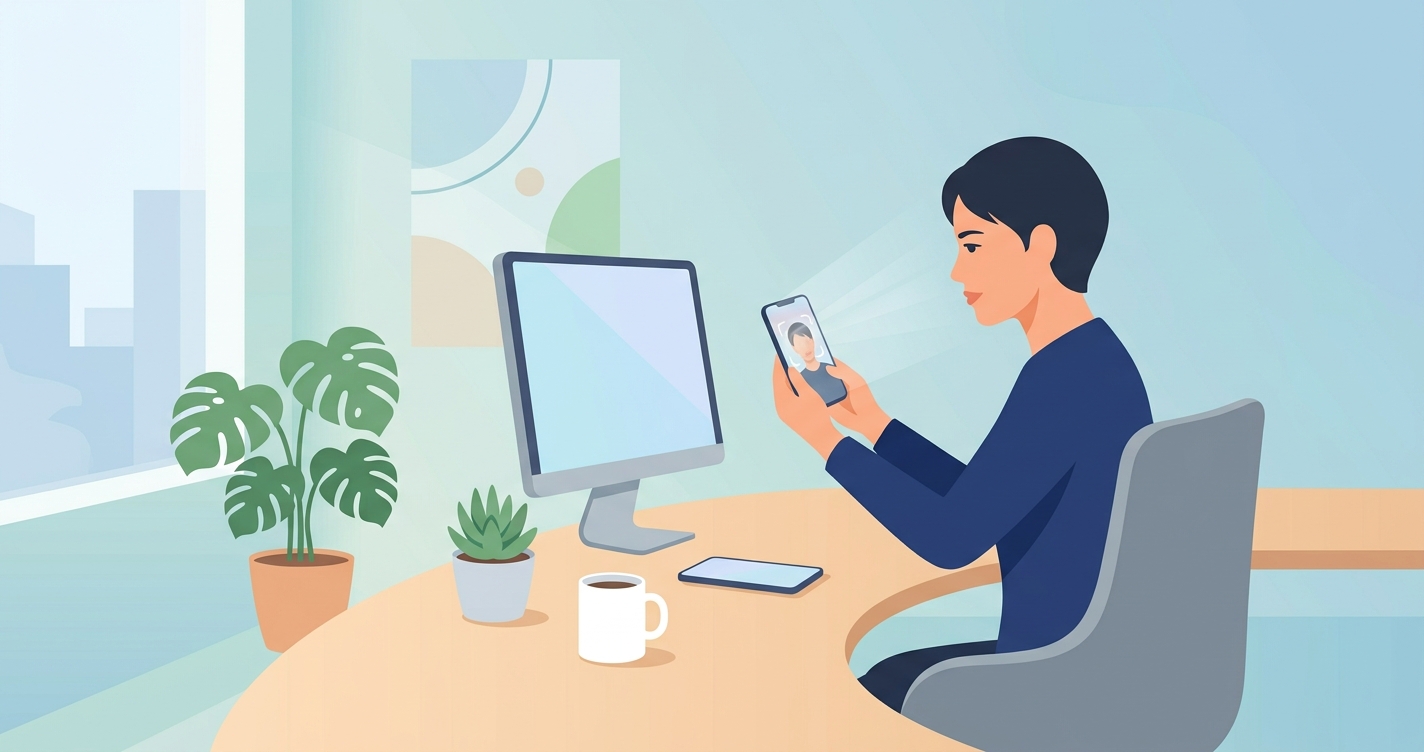
The annual biometric screening is a familiar routine in corporate wellness. It often involves finding a participating clinic, scheduling an appointment, fasting, and waiting in line for a blood draw and other measurements. For remote employees, this process is even more disruptive, involving travel and time away from work. But what if you could complete your employer's biometric screening without leaving your desk? The technology to complete workplace biometric screening from home is not a future concept; it's a rapidly expanding reality, replacing the logistical friction of traditional methods with the convenience of a 30-second scan on a personal device.
"The expansion of remote work has permanently altered employee expectations. A 2023 Gallup poll found that 9 out of 10 remote-capable employees want to work remotely or hybrid long-term. This shift necessitates a move away from location-dependent benefits and toward digital-first solutions that meet employees where they are."
The technology driving at-home biometric screening
The ability to complete workplace biometric screening from home hinges on a technology called remote photoplethysmography (rPPG). This non-invasive technique uses the camera on a standard smartphone or computer to measure vital signs. By analyzing the subtle changes in light reflected from the skin, rPPG algorithms can detect the pulsatile blood flow beneath the surface. From this data, it's possible to estimate key health indicators like blood pressure, heart rate, and heart rate variability.
Pioneering research by academics like Wim Verkruysse at the Eindhoven University of Technology (2008) established the foundational principles of using digital cameras for physiological measurement. Since then, advancements in artificial intelligence and machine learning have dramatically improved the accuracy and reliability of rPPG, making it a viable tool for scalable health assessment. Instead of a needle and a blood pressure cuff, the employee experience is now a simple, guided video scan that takes less than a minute. This approach doesn't just replicate the old model; it transforms it into a process that fits seamlessly into a modern workday.
| Feature | Traditional Onsite Screening | At-Home Digital Screening |
|---|---|---|
| Method | Venipuncture (blood draw), manual BP cuff | rPPG camera scan, digital questionnaire |
| Location | Onsite event, clinic, or lab | Home, office, or any private space |
| Time Commitment | 1-2 hours (including travel/wait time) | 5-10 minutes (including scan and survey) |
| Equipment | Phlebotomy supplies, BP cuffs, scales | Smartphone or computer with a camera |
| Data Turnaround | Days to weeks | Real-time or within minutes |
| Employee Experience | Often involves fasting, travel, and waiting | No fasting, no travel, on-demand |
Industry applications: how employers deploy at-home screening
While the convenience for employees is the most visible benefit, employers and benefits consultants are adopting this technology for its strategic advantages in program administration and population health management.
Reaching a distributed workforce
The most immediate application is for companies with remote, hybrid, or geographically dispersed teams. Traditional screening models that rely on regional vendors or onsite events invariably miss a significant portion of the workforce.
- Consistency: At-home screening standardizes the process for every employee, regardless of their location- from a corporate headquarters to a home office or a field sales role.
- Inclusivity: It removes barriers for deskless workers, manufacturing teams, and others who don't work in a traditional office setting.
- Scalability: A single platform can serve an entire global workforce, eliminating the need to manage multiple regional screening vendors and data formats.
Improving program participation and engagement
The single greatest challenge for wellness program managers is engagement. The logistical hurdles of traditional screenings are a primary driver of low participation.
- By reducing the friction to near zero, at-home screening drastically increases the likelihood that an employee will complete the required assessment.
- The instant feedback and data visualization provide a more engaging experience than waiting weeks for a mailed report.
- This leads to higher completion rates for wellness incentives, driving a better ROI on the program budget.
Integrating data for population health insights
While individual results are protected by privacy laws like HIPAA, employers receive aggregated, de-identified data that provides a real-time snapshot of the workforce's health.
- This data allows benefits leaders to identify rising risk factors within their population, such as trends in hypertension or stress levels.
- Insights can be used to target specific interventions, such as rolling out a stress management program or a heart health campaign.
- Unlike the static, annual data from old screening models, digital platforms can provide more dynamic, ongoing insights as employees use the tools.
Current research and evidence
The validity of rPPG technology is a subject of extensive academic and clinical research. A 2022 review published in the journal Frontiers in Cardiovascular Medicine analyzed numerous studies and concluded that rPPG can achieve high accuracy for heart rate and shows strong correlation with standard cuff-based methods for blood pressure, especially under controlled conditions. Researchers are continuously refining algorithms to account for variables like lighting, skin tone, and movement, which historically posed challenges. A 2021 study in Nature's Scientific Reports demonstrated an AI-powered rPPG model that significantly reduced error rates across different skin types. For employers, this body of evidence provides confidence that the data gathered is a reliable indicator of cardiovascular risk at a population level.
The future of workplace wellness screening
The shift to at-home screening is part of a larger trend moving away from one-off, event-based wellness and toward continuous, integrated health management. The future of the industry is not just about making the annual screening more convenient; it's about using technology to provide employees with tools for ongoing self-awareness and connecting them to resources throughout the year. As wearable devices and health apps become more common, the data from a workplace screening can serve as a baseline, empowering employees to track their progress and make meaningful behavior changes over time.
Frequently asked questions
Q: Is a 30-second phone scan a replacement for a doctor's visit? A: No. A digital biometric screening is a risk assessment tool, not a clinical diagnosis. It provides valuable information about potential health risks like high blood pressure, but it is not a substitute for a comprehensive examination by a healthcare professional.
Q: How is my personal health information kept private? A: Reputable digital screening platforms are built to be compliant with privacy regulations like HIPAA. Your individual results are confidential and are not shared with your manager or employer. The employer only receives aggregated, de-identified data to analyze population-level trends.
Q: What do employers do with the screening data? A: Employers use the anonymized, aggregate data to understand the overall health risks of their workforce. This helps them design more effective wellness programs, target interventions where they are most needed, and measure the impact of their benefits strategy on employee health.
Q: Does this work on any computer or phone? A: Generally, these technologies are designed to work on most modern smartphones, tablets, and computers that have a camera. The software guides the user through the process to ensure the best possible quality for the video scan.
For HR and wellness leaders, the move toward remote-first solutions is an opportunity to build a more effective, engaging, and inclusive benefits strategy. New technologies are making it possible to eliminate the high cost and low participation of onsite events. Circadify is at the forefront of this shift, providing solutions that help organizations complete their workplace biometric screenings from anywhere. To learn more about implementing a digital-first screening program, visit circadify.com/industries/health-systems.