
How to Launch a Biometric Screening Program From Scratch
A start-to-finish launch timeline covering vendor selection, communication, and incentives for first-time corporate wellness directors building a screening program.
Most first-time wellness directors inherit a calendar invite and a vendor contract, not a strategy. The annual biometric event gets booked because it got booked last year, participation lands somewhere between disappointing and embarrassing, and finance asks why the line item exists at all. Building a program from a blank page is actually the better position to be in, because the sequence of decisions you make in the first ninety days determines whether the program produces usable health data or just a stack of unread result sheets. If you are figuring out how to start a biometric screening program that people actually complete, the work begins long before anyone measures a blood pressure.
Without incentives, the median participation rate in workplace screening sits at just 20 percent. With rewards above the $50 threshold, that figure roughly doubles to 40 percent, and comprehensive programs reach 59 percent., Soeren Mattke et al., RAND Corporation Workplace Wellness Programs Study (2013)
How to start a biometric screening program: the launch timeline
A screening program is a project with dependencies, not a single event. The most common failure is treating vendor selection as step one when it should be step three or four. Before you evaluate a single platform, you need to define what the screening is for. A program designed to satisfy an insurer's data requirement looks different from one built to drive behavior change, and the two demand different metrics, biometrics, and follow-up infrastructure.
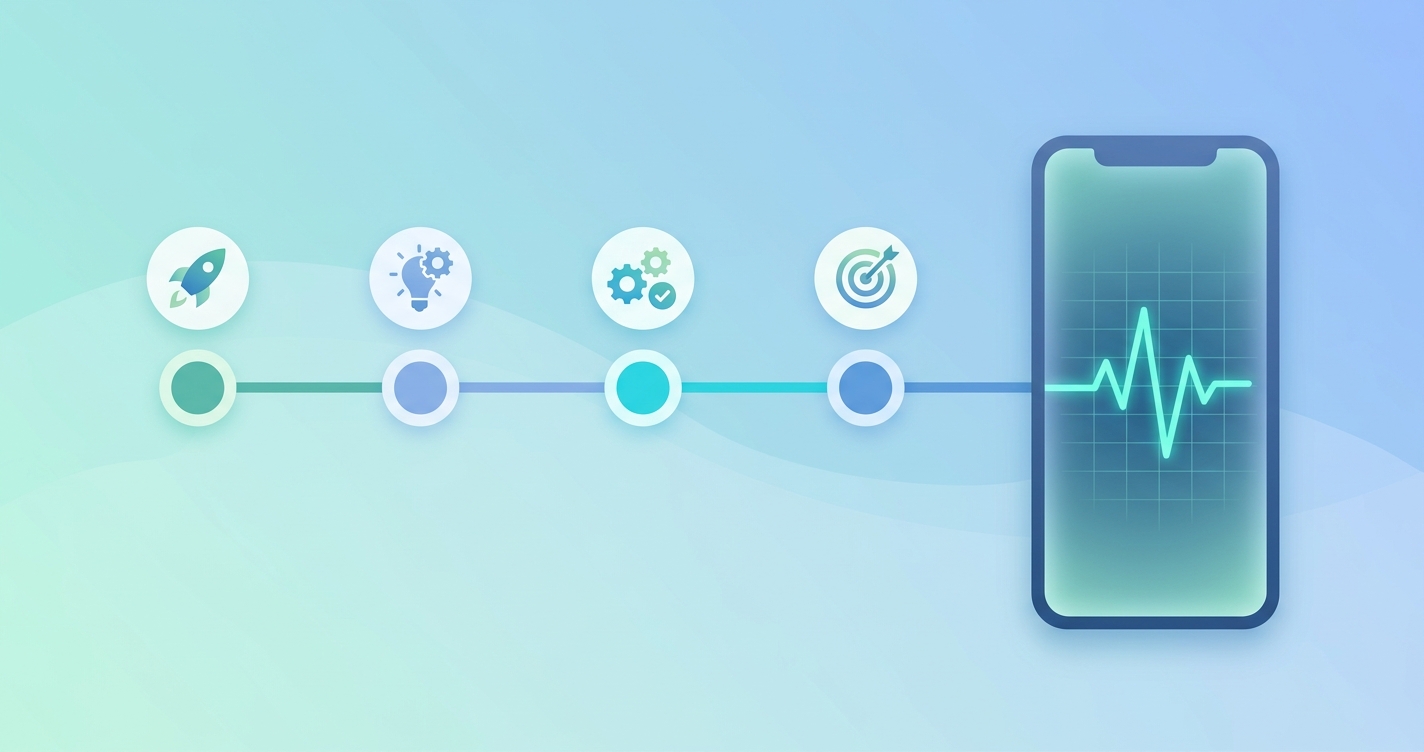
A realistic first-year launch runs across four phases over roughly four to six months:
- Phase one (weeks 1 to 4): Define objectives, secure budget, and confirm legal review. Decide whether the program is participatory or outcomes-based, because that single choice drives everything downstream.
- Phase two (weeks 5 to 9): Evaluate and select a delivery model and vendor. Map your population first, including remote, deskless, and multi-state employees.
- Phase three (weeks 10 to 14): Build the communication plan, finalize the incentive design, and integrate data feeds with your benefits administration and any health plan partners.
- Phase four (weeks 15 to 20): Run a pilot with one department or location, fix what breaks, then open enrollment to the full population.
Skipping the pilot is the second most common mistake. A small-group test surfaces the friction points (a confusing consent screen, a broken result-delivery email, an incentive that does not reconcile with payroll) while the stakes are low.
Comparing screening delivery models
The delivery model you pick shapes cost, reach, and participation more than any other early decision. Below is a comparison of the three approaches most employers weigh when they launch a wellness screening for the first time.
| Delivery model | Typical cost per participant | Reach for remote/deskless staff | Scheduling burden | Best fit |
|---|---|---|---|---|
| Onsite event (nurses, conference room) | $40 to $60+ | Low | High | Single-site, in-person workforces |
| Retail lab or clinic vouchers | $30 to $50 | Moderate | Moderate | Distributed staff near lab networks |
| Digital/smartphone-based screening | $15 to $35 | High | Low | Hybrid, remote, multi-state, deskless |
The cost figures are directional and vary by region and volume, but the pattern holds across most employer RFPs: onsite events carry the highest per-head cost and the heaviest logistics, while digital models trade some clinical depth for reach and lower administrative load. Many first-year programs end up running a hybrid, using onsite days for a flagship location and a digital option for everyone else.
Choosing a vendor without getting locked in
Vendor evaluation is where enthusiasm meets the fine print. Six platforms will respond to your RFP with nearly identical feature grids, so the differentiators are rarely the features themselves. Focus your scoring on the things that are expensive to change later:
- Data portability: Can you export raw, individual-level results in a standard format, or are you renting access to your own population's data?
- Integration: Does the platform feed your benefits administration system, HRIS, and health plan without manual file transfers each cycle?
- Privacy architecture: How is individual health information separated from anything an employer or manager can see? Aggregate-only reporting is the standard you want.
- Population fit: A vendor optimized for single-site events will struggle with a deskless or multi-state workforce, and the reverse is also true.
- Support model: Who answers an employee's question at 9 p.m. during open enrollment, the vendor or your already-stretched HR team?
Ask every finalist for a reference client of similar size and industry, and ask that reference specifically about renewal-year participation, not launch-year numbers. First-year curiosity inflates early results; the durable rate shows up in year two.
Industry Applications
Self-Insured Employers
For self-funded plans, the screening is often the front door to risk identification and targeted disease management. The data justifies the spend, so portability and clinical follow-up pathways matter most. These employers tend to favor models that capture a fuller biometric panel and connect flagged results to coaching or care navigation.
Distributed and deskless workforces
Manufacturing, retail, logistics, and remote-first companies share a problem: the conference-room event reaches a minority of the workforce. Roughly the majority of the global workforce is deskless, and these employees are the most likely to be missed by traditional programs. Digital, phone-based screening removes the geography and scheduling barriers that suppress participation here.
Brokers and benefits consultants
For brokers, a well-run screening program is a retention and differentiation tool. Recommending a model that fits the client's actual population, rather than the default onsite event, signals advisory value and reduces the renewal-cycle churn that comes from programs nobody used.
Current research and evidence
The evidence base on screening is more nuanced than vendor brochures suggest, and a first-time director should know it. The RAND Corporation's Workplace Wellness Programs Study, led by Soeren Mattke and published in 2013, remains the most cited analysis of participation drivers. It found that incentives raise participation by roughly 20 percentage points, that rewards above a $50 threshold are meaningfully more effective than smaller ones, and, counterintuitively, that larger incentives do not produce proportionally better results. Employers offering rewards above $100 reported 51 percent participation versus 36 percent for smaller rewards. Framing an incentive as a penalty, such as a surcharge for non-participation, was associated with a median participation rate of 73 percent, though that approach carries legal and cultural risk.
The Kaiser Family Foundation's annual Employer Health Benefits Survey consistently shows that a large share of employers with 50 or more workers offer wellness programs and that most attach incentives. Yet the same body of research repeatedly finds that participation, not availability, is the binding constraint. A program every employee can access but few complete generates cost without insight.
The compliance picture adds another layer. As legal analysts at firms including SHRM and Mercer have documented, the EEOC's 2016 rule permitting incentives up to 30 percent of self-only coverage was vacated in 2019, and a 2021 proposal limiting incentives to a de minimis amount was withdrawn. The result, as of 2025, is a regulatory gap. The practical guidance from benefits counsel is to keep incentives modest, document that participation is genuinely voluntary, and maintain strict separation between individual health data and anyone in a management role. Have your design reviewed by employment counsel before launch, not after.
The future of biometric screening programs
Three shifts are reshaping how employers build these programs. First, delivery is moving off the loading dock and onto the phone, driven by hybrid work and the cost gap between onsite events and digital models. Second, the measure of success is migrating from completion counts to engagement and follow-through, because a result nobody acts on has no return. Third, data integration is becoming the dividing line between programs that inform benefits strategy and programs that simply check a box. The employers getting ahead are designing for reach and repeatability from day one rather than retrofitting a single-site event to a distributed workforce. For a wellness director launching from scratch today, building around accessibility and clean data feeds is the decision least likely to be regretted at renewal.
Frequently asked questions
How long does it take to launch a biometric screening program from scratch?
Plan for four to six months from objective-setting to full rollout. The legal review, vendor selection, and communication build each take several weeks, and a short pilot before the full launch is worth the added time because it surfaces problems while the stakes are low.
What participation rate should a first-year program expect?
Without incentives, median participation runs around 20 percent. With a reward above the $50 threshold it roughly doubles, and comprehensive programs reach about 59 percent, according to RAND's analysis. First-year curiosity can inflate the number, so judge durability by year-two results.
How much can we offer as an incentive without legal risk?
The EEOC's prior 30 percent cap was vacated in 2019 and no replacement rule is in effect as of 2025. Benefits counsel generally advise keeping incentives modest, documenting that participation is voluntary, and having the design reviewed by an employment attorney before launch.
Should we choose onsite events or a digital screening model?
It depends on your population. Single-site, in-person workforces can justify onsite events, but hybrid, remote, deskless, and multi-state employees are reached far more reliably and at lower cost through a phone-based digital model. Many first-year programs run a hybrid of both.
Circadify is addressing this space directly by helping employers replace expensive onsite events with screening employees can complete from their phone, which removes the geography and scheduling barriers that suppress first-year participation. If you are mapping out your launch and want a structured implementation guide, explore an enterprise wellness demo to see how a digital-first rollout fits your population.