The HR Guide to Implementing Digital Health Screening
The HR guide to implementing digital health screening, with research on access, employee participation, program design, and vendor evaluation.
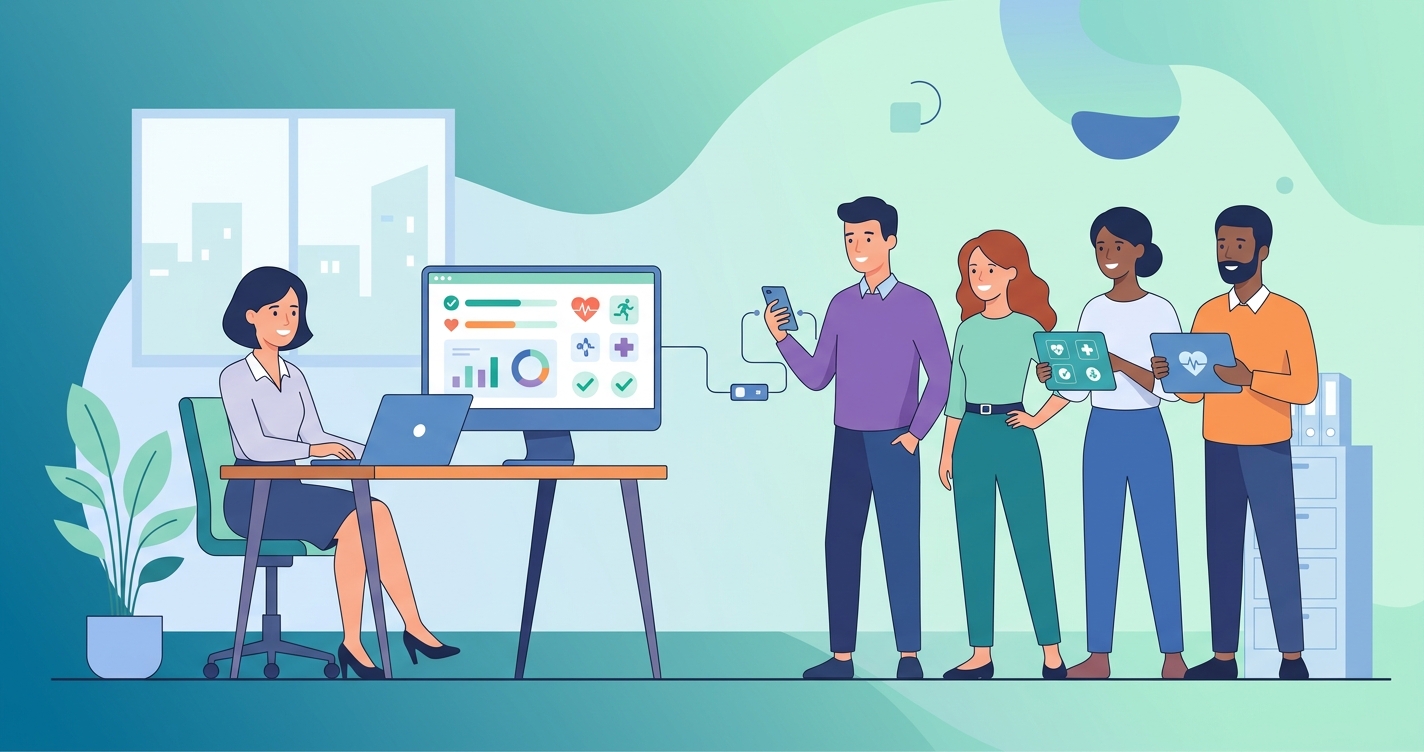
The HR guide to implementing digital health screening starts with a reality most benefits teams already know: traditional screening models were built for a workforce that shows up in one place, on one schedule, with enough spare time to stand in line for a nurse-led event. That is not how most employers operate anymore. HR leaders now have to think about screening as a distributed experience that has to work for salaried office staff, shift workers, field teams, and remote employees without turning participation into an operations headache.
“Well over a fourth of employees (29%) said they had delayed seeking healthcare over the past two years due to financial reasons.” — Mercer, Health on Demand 2025
Why HR teams are rethinking digital health screening
For years, employers treated biometric screening as an annual event. It happened in a conference room, near open enrollment, and usually depended on a vendor's ability to get clinicians onsite. That model still works for some headquarters-heavy populations, but it breaks down quickly when the workforce is scattered across multiple sites or works irregular hours.
Research has been pushing HR teams to look harder at program design instead of assuming screening alone will produce measurable savings. In the Illinois Workplace Wellness Study, Katherine Baicker of the University of Chicago and Zirui Song of Harvard Medical School found that workplace wellness programs improved some self-reported health behaviors, but did not produce detectable improvements in clinical outcomes, healthcare spending, absenteeism, or job performance after 18 months. That does not make screening useless. It does mean HR has to be more careful about what screening is supposed to do.
In practice, the strongest case for digital screening is operational. It makes access easier, reduces coordination burdens, and gives employers a way to gather more consistent health signals across a distributed workforce. That matters in a market where Mercer reported in 2025 that 19% of employees delayed care because they could not take time off work, and another 19% delayed care because navigating the system was too difficult.
What digital health screening changes for HR operations
Digital health screening shifts the implementation question from logistics to workflow. Instead of asking how many onsite events to schedule, HR has to decide how screening fits into benefits communication, privacy governance, incentive design, and vendor integration.
| Screening model | HR workload | Employee access | Data consistency | Best fit |
|---|---|---|---|---|
| Onsite biometric event | High coordination, vendor scheduling, makeup sessions | Limited to specific dates and locations | Often fragmented across files and vendors | Large campuses |
| Lab voucher model | Moderate administration, broad vendor oversight | Better reach but uneven employee experience | Varies by provider and reporting format | Distributed office populations |
| At-home kit model | Moderate logistics, shipping and follow-up required | Flexible for remote workers | Better than vouchers, but return rates can be uneven | Hybrid workforces |
| Digital phone-based screening | Lower event coordination, more workflow setup upfront | Broadest access across remote and deskless groups | Strong if tied to one digital record | Multi-site and mobile workforces |
The Health Enhancement Research Organization's consensus statement on biometric screening, developed with committee co-chairs Chris Behling and Rebecca Kelly, argued that successful employer screening programs need clear goals, privacy protections, implementation planning, and integration with a broader health management strategy. HR teams sometimes skip that step and jump straight to vendor demos. That is usually where trouble starts.
A good digital screening rollout is less about buying a feature and more about setting the rules of the program early.
- Decide which employee populations are in scope first
- Define whether screening supports incentives, risk identification, or year-round engagement
- Establish one completion record and one reporting standard
- Build accommodations for workers with limited device access or schedule flexibility
- Set privacy language before launch, not after complaints arrive
The HR guide to implementing digital health screening without creating friction
The title says guide, but the real issue is governance. HR does not need another step-by-step checklist as much as it needs a decision framework.
Start with access, not technology
Many HR teams evaluate digital screening by asking what the tool can measure. A better starting point is whether employees can realistically complete the process. Mercer’s 2025 findings on delayed care are useful here because they show how often access barriers have nothing to do with clinical need. If workers cannot take time off, do not trust the process, or feel the program sits outside normal benefits workflows, participation falls no matter how modern the technology looks.
Treat privacy as part of implementation
Digital screening creates a different employee reaction than a once-a-year onsite event. The process may feel easier, but it can also feel more personal because it happens on a phone or laptop camera. That means HR, legal, and IT need to agree on what data is collected, how long it is stored, who sees it, and how individual versus aggregate reporting is handled.
Design for repeatability
One reason employers are moving toward digital-first programs is that the model supports more than a single annual campaign. A repeatable workflow can support open enrollment, incentive verification, periodic check-ins, or targeted condition-management outreach. If the workflow only makes sense during one two-week window, it is not really digital transformation. It is just an online version of an old event.
Industry applications for different employer environments
Headquarters and salaried populations
For office-heavy employers, digital screening works best when it is embedded into broader benefits communication. The employee should not feel like they are visiting a separate health program with a separate identity flow and separate reminders. That is one reason many teams reviewing how to choose a corporate wellness technology platform now rank integration above feature count.
Hourly, retail, and field workforces
These populations expose weak implementation decisions quickly. If the screening depends on desktop access, paid time assumptions, or managers remembering to remind employees, completion rates will vary wildly by site. Employers with dispersed teams often run into the same standardization problem discussed in how multi-location employers standardize health screening: the policy is centralized, but the experience is local and uneven.
Remote and hybrid organizations
Remote-first workforces are where digital screening makes the clearest operational case. HR does not need to recreate an onsite event in a distributed setting. It needs one workflow that fits the same communication channels employees already use for enrollment, benefits support, and wellbeing programming.
Current research and evidence
The most useful research in this category is not always flattering to employer wellness programs, and that is exactly why it matters. Baicker and Song's 2019 randomized trial in JAMA found no significant effect on measured physical health, healthcare spending, or employment outcomes, even though some health behaviors improved. HR leaders should read that as a warning against overselling ROI from screening alone.
The HERO consensus statement on biometric health screening made a related point from a program-design angle. Chris Behling and Rebecca Kelly, working with the study committee, framed screening as one component of a larger employee health management approach rather than a standalone intervention. In plain English: screening works better when it feeds something useful.
More recent evidence on digital programs is somewhat more encouraging, though still cautious. In a 2025 Journal of Medical Internet Research meta-review, Saeed Amirabdolahian, Guy Paré, and Stefan Tams reviewed 29 studies of digital wellness programs in workplace settings. Their conclusion was that employer-provided digital wellness programs show promise across several domains, but the literature still has gaps around durability, technology design, and causal mechanisms. That is a fair description of where HR is right now. The tools are improving faster than the proof base is.
Mercer's 2025 Health on Demand report adds an employee-experience lens that HR teams should not ignore. When 29% of workers report delaying care for financial reasons and 19% say they could not take time off work, any screening strategy that depends on extra appointments or offsite travel is going to bias participation toward the people with the easiest access.
- Screening alone rarely proves ROI
- Access and convenience strongly affect participation
- Digital programs look more useful when they fit existing workflows
- Privacy, incentives, and reporting architecture matter as much as the measurement tool
The future of digital health screening in HR
The next phase is probably less about replacing every old screening method and more about building smarter screening portfolios. Some employers will keep onsite events for dense locations, executive exams, or populations that prefer in-person options. But the center of gravity is clearly moving toward flexible digital models that can support distributed workforces without rebuilding the program every year.
That shift will change vendor evaluation too. HR buyers will care less about whether a platform can host one annual campaign and more about whether it can plug into eligibility files, incentive systems, and broader wellness reporting. Solutions like Circadify fit into that conversation because they give employers a way to think about screening as a digital workflow rather than a traveling event.
The practical question for HR is not whether digital screening sounds innovative. It is whether the model reduces friction for employees and administration at the same time. If it does not do both, it will end up as another pilot that looked good in the proposal and quietly faded after renewal season.
Frequently asked questions
What is digital health screening in an HR context?
It usually means employees complete some portion of a health screening process through a digital interface rather than an onsite-only event. That can include questionnaires, at-home kits, or camera-based vital sign screening, depending on the program design.
Why are employers moving away from onsite-only screening?
Because workforce structure changed. Remote work, multi-location operations, and shift-based scheduling make annual onsite events harder to run and less representative of the full employee population.
Does digital health screening improve wellness ROI?
The research does not support simple claims like that. Studies suggest screening can improve participation and some health behaviors, but ROI depends on how the data is used, how the program is integrated, and whether employees actually engage with follow-up interventions.
What should HR teams evaluate before launch?
Focus on employee access, privacy rules, reporting standards, integration with benefits systems, incentive design, and accommodation paths for workers who cannot use the default digital workflow.