Is the company wellness app reading my heart rate spying on me?
Employee concern over wellness app data privacy is rising. Learn the difference between one-time consented capture and continuous tracking surveillance.
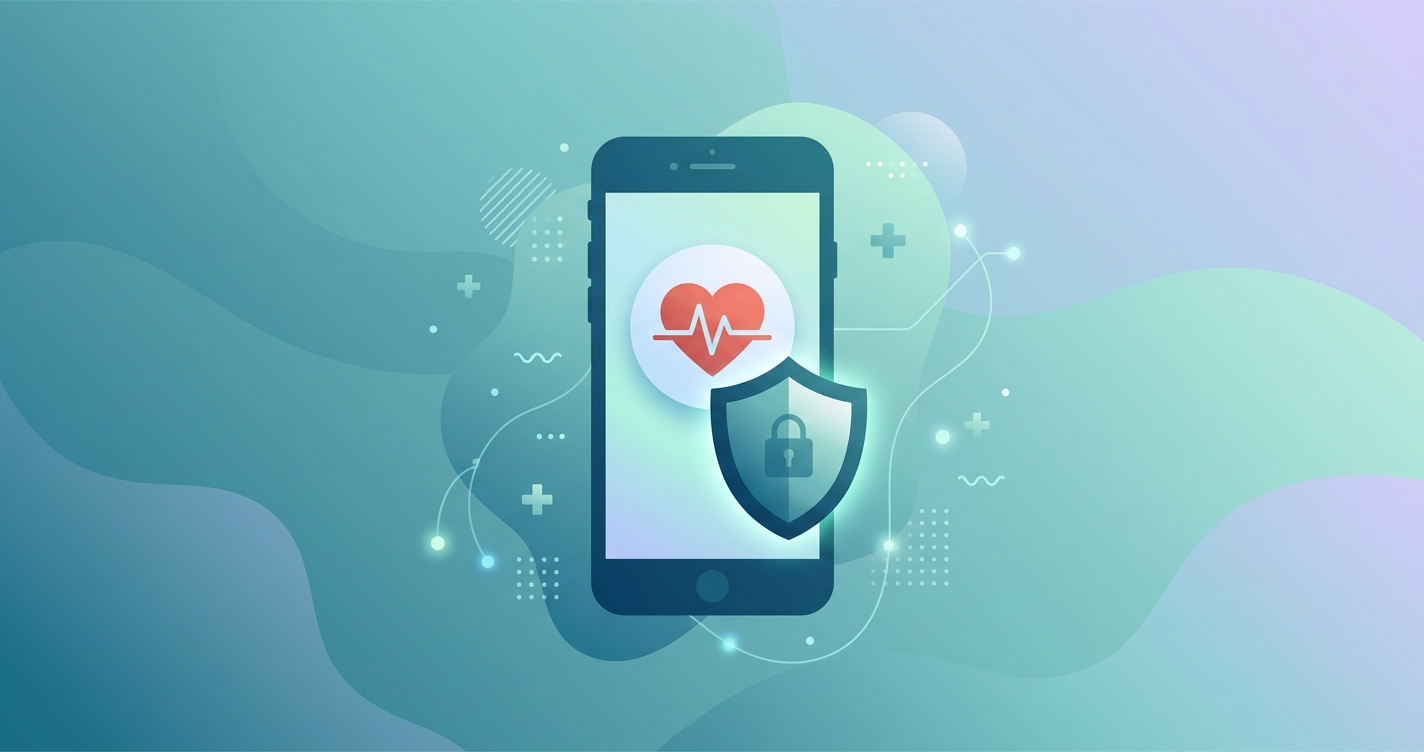
The rise of digital wellness tools has introduced a new tension into the employer-employee relationship. An email arrives announcing a new phone-based health screening, promising to measure vital signs like heart rate with just a 30-second scan. For many employees, the first question is not about the technology's accuracy, but its intent. Is this tool a benefit designed for my well-being, or is it a new form of corporate surveillance? This question gets to the heart of a critical issue for the future of workplace health: the difference between consented, one-time data capture and continuous, passive monitoring. The concern that is corporate wellness app tracking surveillance is a valid and growing one that employers must be prepared to address with transparency and robust data privacy architecture.
"A 2023 survey found that 65% of employees are concerned about how their employers collect and use their personal data, a figure that highlights the deep-seated mistrust that wellness program administrators must overcome to achieve genuine engagement."
Is corporate wellness app tracking surveillance? a technical and legal analysis
The answer to whether a wellness app is tracking you depends entirely on its design and the legal frameworks that govern it. There are two fundamentally different models for collecting employee health data: one-time, point-in-time assessments and continuous, all-the-time tracking. The former is a snapshot, taken with full user consent for a specific purpose. The latter is a live feed, often collecting vast amounts of data in the background.
A key misunderstanding among employees and even some program managers is the scope of the Health Insurance Portability and Accountability Act (HIPAA). While employees assume it protects all their health data, many wellness vendors are not "covered entities" under HIPAA law. A 2023 report from the policy institute Data & Society, titled 'Wellness Capitalism,' emphasized how much of the wellness industry operates in this regulatory gray area. This means the data they collect may not have the same legal protections as the information held by your doctor or health plan.
This is where principles of data minimization become the key differentiator. A privacy-forward approach collects only the minimum necessary data for a clearly defined purpose and discards it securely afterward. A surveillance-oriented approach collects as much as possible, often with vague justifications about future uses. For wellness directors, understanding this distinction is the first step to designing a program that builds trust rather than undermines it.
| Feature | One-Time Biometric Assessment | Continuous Activity Tracking |
|---|---|---|
| Data Collection | Captures specific metrics (e.g., heart rate, blood pressure) during a single, user-initiated session. | Passively collects data 24/7 (e.g., steps, location, sleep patterns, ambient noise). |
| User Consent | Requires explicit consent for each specific scan. | Often relies on a one-time, broad consent during app installation. |
| Data Storage | Data is typically processed to generate a result and then de-identified or deleted. Raw data is not stored long-term. | Data is continuously stored and aggregated, often in the cloud, to build a detailed user profile over time. |
| Primary Purpose | To provide a confidential health snapshot for individual awareness and aggregate, anonymous reporting. | To monitor behavior, drive engagement through gamification, and potentially influence insurance premiums. |
| Privacy Risk | Low, if data minimization and de-identification are properly implemented. | High, due to the volume and sensitivity of the data collected, and the risk of re-identification and unauthorized use. |
Industry applications for building trust
For corporate wellness directors and the benefits brokers who advise them, navigating employee suspicion is a major component of a successful program launch. The key is proactive communication and vendor selection based on privacy architecture, not just features.
- Vendor Vetting: Ask potential wellness platform vendors explicit questions about their data minimization and retention policies. Are they a HIPAA-covered entity? If not, what specific privacy frameworks (like GDPR or CCPA) do they adhere to?
- Employee Communication: Address the surveillance question head-on. Clearly explain what data is being collected, why it is being collected, how it is protected, and when it is deleted. Use comparison charts and FAQs to make the information accessible.
- Focus on Anonymity: Emphasize that all reporting provided to the employer is aggregated and anonymized. Provide concrete examples, such as "The company will see that 25% of the workforce is at high risk for hypertension, not that John Doe from accounting has high blood pressure."
Current research and evidence
The topic of electronic surveillance in the workplace has been a subject of intense academic scrutiny. Ifeoma Ajunwa, a professor of law and ethics at Emory Law School, is a leading voice in this field. In her book, "The Quantified Worker," Ajunwa (2023) argues that technology has enabled "limitless worker surveillance," which can erode employee privacy and autonomy. She makes a critical distinction between technology that empowers workers and technology that simply quantifies them for management's benefit.
Her research suggests that the design of a wellness program determines whether it is perceived as a benefit or a threat. When data collection is constant and involuntary, it feels like surveillance. When it is episodic, voluntary, and clearly tied to a personal benefit with robust privacy controls, it can be a valuable tool. A study from Duke University in 2023 that found data brokers selling lists of individuals with specific mental health conditions further highlights the real-world risks when wellness data is not adequately protected.
The future of corporate wellness data privacy
The industry is at a crossroads. The trend is moving away from invasive, continuous tracking and toward models that respect employee privacy through strong data minimization, purpose limitation, and user control. As state-level data privacy laws increase and employees become more sophisticated about data rights, employers will find that privacy-preserving wellness technologies are Better for legal compliance. For employee trust and engagement. The most successful programs of the next decade will be those that treat employees as partners in their health, not as data points to be monitored.
Frequently asked questions
Q: Can my boss see my individual heart rate from a wellness scan? A: No. In a properly designed, privacy-compliant system, individual biometric results are never shared with your manager or employer. Reporting is only done at an aggregate and anonymized level to show population-wide risk factors.
Q: What is the difference between a wellness app and the health data on my phone (like Apple Health)? A: Your personal phone's health kit is controlled by you and is not shared unless you explicitly grant access. A corporate wellness app is managed by a third-party vendor, and its data policies are determined by your employer's contract with that vendor. It is crucial to understand these specific policies.
Q: Why do many wellness apps fall outside of HIPAA? A: HIPAA's protections generally apply to "covered entities" like healthcare providers and health insurance plans. Many app developers and wellness vendors are considered technology companies, not healthcare providers, and therefore are not automatically subject to HIPAA rules unless they are contracted as a "business associate" of a covered entity.
Q: What does "data minimization" mean in this context? A: It means the program is designed to collect only the data that is absolutely necessary to provide a specific service. For a biometric scan, this would be the physiological data during the scan itself. The system would not access or store your location, contacts, or other personal information from your phone.
The challenge of is corporate wellness app tracking surveillance is one that requires a thoughtful approach to technology design and clear communication. Circadify is at the forefront of developing health screening technologies that are built on a foundation of data minimization and user trust, providing solutions for health systems that prioritize individual privacy while still delivering valuable population insights. To learn how one-time, consented biometric capture can work for your enterprise wellness program, explore a demo at circadify.com/industries/health-systems.