
Wellness Program RFP: What to Ask Biometric Screening Vendors
A comprehensive guide for benefits brokers and wellness directors on the critical biometric screening vendor RFP questions covering cost, privacy, and engagement.
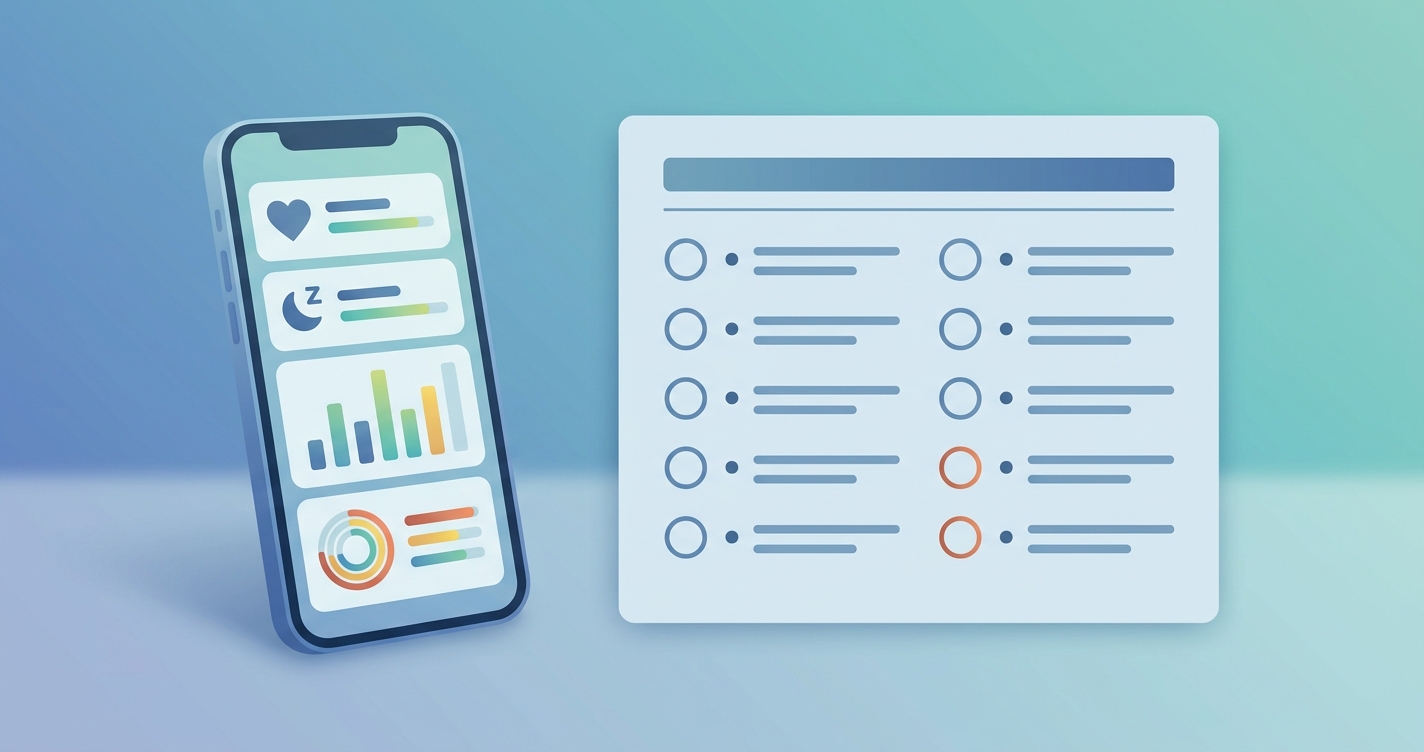
The corporate wellness procurement cycle has historically favored a familiar, if flawed, model. Every year, human resources teams reserve conference rooms, hire temporary clinical staff, and schedule rigid appointments for employees to have their blood drawn. As benefits brokers and wellness directors draft their biometric screening vendor RFP questions for the upcoming plan year, they are realizing this legacy approach no longer aligns with how modern organizations actually operate. A highly distributed, remote-capable workforce requires a radically different set of evaluation criteria. With onsite events averaging $40 to $75 per participant before factoring in lost productivity, travel minimums, and logistical overhead, the standard health fair is quickly becoming an unsustainable budget item. Today, the conversation is shifting toward digital solutions that eliminate the logistical friction of onsite events while meeting the strict privacy standards demanded by modern procurement teams.
"In a comprehensive 2019 randomized clinical trial of workplace wellness programs at BJ's Wholesale Club, researchers Zirui Song and Katherine Baicker of Harvard University and the University of Chicago found no significant differences in clinical measures of health or healthcare spending over 18 months, indicating that traditional screening and intervention models require a fundamental redesign to drive meaningful return on investment."
Core biometric screening vendor RFP questions
When building a modern Request for Proposal for employee health assessments, buyers must look beyond the standard checklist of fingerstick panels and aggregate reporting. The corporate health sector has matured, and vendor evaluation must reflect the current demands of a hybrid labor force. The RFP process serves as the final line of defense against poor vendor selection, forcing benefits consultants to interrogate how a platform actually functions in the real world. The following categories represent the critical biometric screening vendor RFP questions every employer health consultant should include to ensure they are selecting a sustainable, high-value partner.
| Feature | Traditional Onsite Biometric Screening | Digital Phone-Based Health Assessment |
|---|---|---|
| Cost Structure | $40 to $75 per participant plus travel and minimum site fees | Flat per-participant or per-employee-per-month model |
| Accessibility | Requires physical presence at a specific time and location | Available on the employee's personal device at any time |
| Data Privacy | Paper forms and manual data entry by temporary event staff | Encrypted digital capture with localized processing |
| Scalability | Limited by nurse availability and physical clinic logistics | Instantly scalable across global and remote workforces |
Accuracy and clinical validity
The foundation of any health assessment is the reliability of the data it produces. Traditional models rely on physical blood draws, but newer models utilize digital sensors and software algorithms. Evaluating these vendors requires specific inquiries into their scientific validation and data collection methods.
- What is the specific methodology used to capture vital signs or biometric markers without physical blood draws?
- How is the technology calibrated for diverse populations, including variations in skin tone, age, and physical ability?
- Can the vendor provide peer-reviewed validation studies supporting their measurement algorithms?
- Does the screening account for physiological variables like white coat syndrome that often skew onsite clinical readings?
Data privacy and security
Employee trust is the single most critical factor in wellness program participation. If a workforce believes their employer or a third-party vendor is monetizing their health data, engagement will fail. This is especially true as the market sees an increase in vendors operating outside standard clinical compliance frameworks.
- Does the platform process health data locally on the user's device, or is it transmitted to a central cloud server for analysis?
- Is the vendor fully compliant with HIPAA regulations, even if the wellness program operates outside a traditional clinical setting?
- Will the vendor explicitly guarantee in the service contract that employee health data is never sold or licensed to third-party data brokers?
- What are the exact protocols for data deletion when an employee leaves the company or revokes their consent?
Employee engagement and user experience
A screening platform is completely useless if employees refuse to log in or schedule an appointment. Procurement teams must investigate how the vendor reduces friction for the end user and integrates with existing corporate incentive structures.
- How many steps are required for an employee to complete their screening from start to finish?
- Does the platform require employees to fast for 12 hours prior to the assessment, a requirement which historically depresses participation rates?
- What specific communication templates and adoption strategies does the vendor provide to assist human resources teams with the rollout?
- How quickly do employees receive their results, and are the insights presented in clear, non-clinical language?
Pricing and hidden fees
The initial quote provided in an RFP response rarely matches the final invoice for traditional onsite events. Benefits brokers must force vendors to disclose every potential surcharge before signing a multi-year agreement.
- Are there minimum participation fees or financial penalties if employee engagement falls below a certain threshold?
- Does the proposal include hidden costs for bilingual staff, data integration with the primary health plan, or custom branding?
- How does the per-user cost change as the program scales from hundreds to thousands of employees?
- What are the specific travel and accommodation billing rates for nurses servicing remote or rural office locations?
Adapting to different workforce models
The era of the uniform corporate schedule is over. A successful vendor must prove they can reach every segment of an employer's population, not just the executives sitting at the headquarters. An effective RFP will stress-test the vendor's ability to operate across diverse logistical environments.
Hybrid and remote teams
For corporate wellness directors managing hybrid environments, the logistics of an onsite health fair are impossible to justify. Remote employees are rarely willing to drive to a corporate office solely for a wellness check, and setting up regional clinics for scattered workers is cost-prohibitive. Digital screening platforms solve this by meeting the employee where they are. Vendor evaluation must confirm that remote workers receive the exact same quality of service and assessment as their in-office counterparts.
Shift and deskless workers
Manufacturing, retail, and logistics populations have historically been excluded from traditional biometric screenings due to scheduling conflicts and the sheer cost of staffing nurses across multiple shifts. When assessing a vendor, buyers must ask how the solution accommodates a third-shift warehouse worker who cannot attend a mid-day health fair. Mobile-first digital assessments are highly effective for these populations because they require no scheduled appointments or disruption to the production line.
Global and multinational organizations
For global enterprises, running a unified wellness program across multiple countries introduces massive regulatory and logistical hurdles. Shipping medical supplies or hiring local clinical staff in dozens of different regions requires navigating a maze of international health regulations and labor laws. A digital-first vendor can bypass these physical supply chain issues, offering a standardized software solution that adapts to local languages and privacy frameworks.
Current research and evidence
The push to modernize the vendor evaluation process is driven by mounting evidence that conventional wellness models are underperforming. The 2019 study published in the Journal of the American Medical Association by researchers Zirui Song and Katherine Baicker evaluated a large-scale wellness program across 160 worksites at BJ's Wholesale Club. Following over 32,000 employees, the study revealed that while self-reported behaviors improved marginally, the massive investment in physical screenings did not translate into better clinical outcomes or reduced medical spending over the 18-month study period. This research forced benefits consultants to rethink their procurement strategies, shifting the focus from simple data collection to actionable, low-friction employee engagement.
Furthermore, a 2023 meta-review published by the National Institutes of Health on digital wellness programs highlighted that privacy concerns remain a primary barrier to employee participation. The review emphasized that when employees fear their employer might access their sensitive health data, engagement plummets. This research indicates that modern RFPs must prioritize privacy architecture, specifically focusing on vendors that do not store biometric data on employer-accessible servers or sell information to external data brokers.
The future of biometric screening
The future of corporate wellness is untethered from the conference room. Employers are actively seeking ways to eliminate expensive onsite biometric events, opting instead for technology that allows employees to scan from their phone. This shift Democratizes access to health insights across distributed teams. Drastically reduces the overhead costs associated with vendor travel, temporary staffing, and lost productivity.
As the industry moves forward, the primary biometric screening vendor RFP questions will no longer center on how many nurses a company can deploy to a specific zip code. Instead, procurement will focus on software scalability, algorithmic transparency, and cryptographic data security. The future relies on accessible, low-friction check-ins that empower employees to track their own health trends over time, rather than relying on a single annual snapshot. The vendors that win future contracts will be those that offer secure, immediate insights without the clinical friction of legacy models.
Frequently asked questions
What are the hidden costs of onsite biometric screenings?
Standard onsite events typically quote a base rate of $40 to $75 per participant. However, vendors often add hidden fees for nurse travel, lodging, minimum participation penalties, custom aggregate reporting, and bilingual staffing. These surcharges can quickly inflate a wellness budget far beyond the initial proposal.
How can employers ensure data privacy in digital wellness programs?
Employers should require vendors to stipulate their data handling practices directly in the service agreement. Key requirements include full HIPAA compliance, local data processing on the user's device rather than central cloud storage, and an absolute prohibition on selling user data to third parties.
Why is participation low in traditional wellness events?
Participation in traditional events is often suppressed by logistical friction. Employees must take time out of their workday, travel to a specific room or clinic, and sometimes fast beforehand. Additionally, many employees avoid these events due to a fear of needles or anxiety regarding clinical settings.
What is the advantage of phone-based health assessments?
Phone-based assessments remove the physical barriers to health screening. They allow employees to capture their vital signs privately, securely, and at a time of their choosing. This convenience drives higher participation rates across distributed, remote, and deskless workforces while eliminating the need for expensive onsite vendors.
Circadify is fundamentally changing how benefits brokers and corporate wellness directors approach employee health assessments in the modern era. By providing a platform that allows employees to complete a comprehensive health check directly from their smartphone, Circadify eliminates the logistical friction and high costs of traditional onsite events. To see how our technology fits into your next benefits strategy and to streamline your procurement process, request an Enterprise wellness demo today.