What Is a Digital Biometric Screening Platform, Exactly?
A plain-language explainer of how a digital biometric screening platform works end to end, from phone scan to results, for wellness directors and brokers.
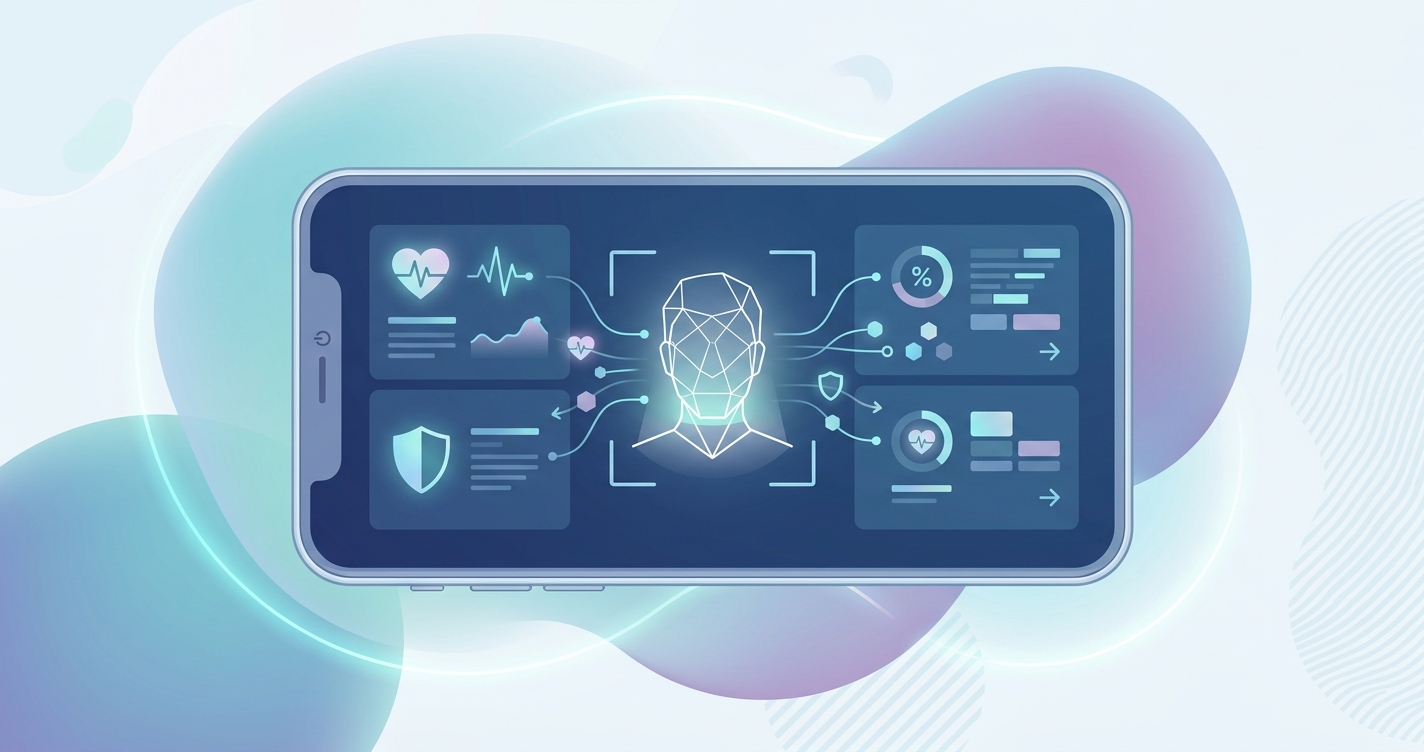
Most benefits teams have run the same screening playbook for years: book a vendor, reserve a conference room, and hope enough people roll up their sleeves before noon. The model works on paper, but the participation numbers tell a quieter story. A digital biometric screening platform reframes the entire exercise by moving the measurement off the loading dock and onto the device every employee already carries. Instead of a single event tied to a building and a calendar slot, screening becomes something an employee completes in a few minutes from a kitchen table, a break room, or a job site. For wellness directors and brokers trying to explain this shift to skeptical stakeholders, it helps to understand exactly what these systems do, step by step.
In 2024, only 9% of small firms and 44% of large firms offered biometric screening at all, and median participation in unincentivized programs sits near 20%, according to the Kaiser Family Foundation Employer Health Benefits Survey.
What a digital biometric screening platform actually does
A digital biometric screening platform is software that collects, processes, and reports an employee's health indicators without requiring an onsite clinical event. The term covers a range of approaches, but the common thread is that the data capture happens remotely, usually through a smartphone, and the results flow back to the employee and to aggregate program reporting through a secure pipeline rather than a stack of paper forms.
It is worth separating the marketing label from the mechanics. When people ask how digital health screening works, they are usually asking three distinct questions: how the platform takes a measurement, how it turns that measurement into a result, and who is allowed to see the result. Good online biometric screening software answers all three transparently.
The capture method is where these systems differ most. Some rely on camera-based scanning, where a phone's front camera observes subtle color changes in the face to estimate cardiovascular signals using remote photoplethysmography (rPPG). Others pair the app with a mailed kit for finger-stick blood values such as cholesterol and glucose, while the app handles identity, questionnaires, and reporting. Many programs blend both so the virtual employee health assessment covers the same metrics a conference-room nurse once recorded.
How the end-to-end flow works
The employee experience tends to follow a predictable sequence, regardless of vendor:
- Invitation and enrollment. The employee receives a link, verifies identity, and consents to how data will be used.
- Data capture. A facial scan, a connected device reading, or a mailed lab kit collects the raw biometric inputs.
- Processing. Signal-processing or lab analysis converts raw inputs into recognized values like blood pressure ranges, resting heart rate, or lipid panels.
- Personal results. The employee sees a private dashboard with their numbers, plain-language context, and suggested next steps.
- Aggregate reporting. The employer receives de-identified, population-level summaries for program design, never individual results.
- Follow-up routing. Flagged results trigger referrals to a clinician, coach, or care navigation resource.
That last step matters more than the scan itself. A screening that surfaces an elevated reading and then does nothing is just data collection. The platforms that earn their keep close the loop between a concerning number and a human who can act on it.
Digital platform vs traditional onsite event
The clearest way to explain the category to a CFO or a broker is a direct comparison against the onsite model most organizations already run.
| Dimension | Digital biometric screening platform | Traditional onsite event |
|---|---|---|
| Location | Any location with a phone | Fixed conference room or clinic |
| Scheduling | On the employee's own time | Reserved time blocks, often mid-shift |
| Reach for remote staff | High, no travel required | Low, requires onsite presence |
| Deskless and shift workers | Accessible from a job site | Frequently missed entirely |
| Per-event logistics | Software-driven, minimal coordination | Nurses, supplies, room booking, parking |
| Marginal cost per added site | Near zero | New event at each location |
| Data handling | Digital pipeline with audit trail | Paper forms, manual entry |
| Privacy exposure | Direct-to-employee dashboard | Shared physical space |
The comparison is not an argument that one method is universally superior. Finger-stick labs still measure things a camera cannot. The point is that the two models optimize for different constraints, and a workforce that no longer reports to one building strains the assumptions the onsite event was built on.
Industry Applications
Distributed and hybrid workforces
With a large share of remote-capable employees now working outside a central office at least part of the week, the single-site event reaches a shrinking fraction of the population. A digital biometric screening platform lets a benefits team extend the same assessment to home offices, satellite locations, and field roles without scheduling a separate event for each.
Deskless and frontline industries
Manufacturing, logistics, retail, and healthcare employers manage workforces that rarely sit at a desk and almost never have time to leave a shift for a clinic appointment. Phone-based capture meets these employees where they already are, which is the only realistic path to meaningful participation for groups traditional programs routinely miss.
Broker and consultant differentiation
For benefits brokers, online biometric screening software has become a way to bring something genuinely new to a renewal conversation. Instead of repackaging the same carrier products, a broker can show an employer a screening model that lifts participation and reduces the operational drag of event coordination.
Current research and evidence
The measurement science behind camera-based capture is rooted in remote photoplethysmography, a technique reviewed in depth by researchers including a 2021 survey published in the journal Sensors and indexed by the National Center for Biotechnology Information, which documented how cameras detect blood-volume changes through skin color shifts. That literature is candid about the variables that affect quality, including lighting, motion, and skin tone, which is why credible platforms publish their methods and limitations rather than treating the technology as a black box.
On the program side, the Kaiser Family Foundation's 2024 Employer Health Benefits Survey found that 65% of large firms offering screening attach incentives or penalties to drive participation, an implicit admission that the underlying experience is friction-heavy enough to require a financial nudge. The same survey noted that 46% of respondents in related industry reporting anticipated reduced investment in conventional biometric screening, while appetite for more accessible, digital-first health tools continued to rise.
The evidence base for camera-derived vitals is still maturing, and the responsible framing is that these tools estimate indicators rather than deliver diagnoses. Used as a triage and engagement layer that routes elevated readings toward clinical follow-up, they address the participation gap that has limited the value of screening programs for years.
The future of digital biometric screening
The trajectory points toward screening that feels less like an annual event and more like an ongoing, low-friction check-in. Several developments are worth watching:
- Expanded metric coverage as signal-processing models improve and connected home devices proliferate.
- Tighter integration with care navigation, so a flagged result becomes a scheduled appointment rather than a PDF.
- Clearer regulatory and validation expectations as employers demand documentation of how estimates are produced.
- Year-round cadence replacing the one-and-done event, giving wellness directors trend data instead of a single snapshot.
The organizations that benefit most will treat the platform as infrastructure for engagement, not as a cheaper version of the old event. The measurement is the easy part. Turning a high participation rate into earlier conversations about preventable risk is where the real return lives.
Frequently asked questions
What is a digital biometric screening platform in simple terms?
It is software that lets employees complete a health screening from their phone or home instead of attending an onsite clinical event. It captures biometric inputs, processes them into recognized health values, delivers private results to the employee, and reports only de-identified, population-level summaries to the employer.
How does digital health screening work without a nurse on site?
Capture happens through a phone camera using remote photoplethysmography, a connected device, or a mailed lab kit, depending on the metric. The platform processes those inputs, returns results to the employee's dashboard, and routes any flagged readings to a clinician or coach for follow-up.
Can my employer see my individual results from a virtual employee health assessment?
No. Reputable platforms send individual results only to the employee. Employers receive aggregate, de-identified data for program planning, consistent with privacy protections that keep personal health information out of management's hands.
Does online biometric screening software replace lab work entirely?
Not always. Camera-based capture estimates cardiovascular indicators, while blood values like cholesterol and glucose typically still require a finger-stick or lab kit. Many programs combine methods so the digital assessment covers the same panel a traditional event would.
Circadify is building in this space, developing phone-based screening designed to remove the cost and logistics of onsite events while extending reach to remote and deskless employees. Wellness directors and brokers who want to see the end-to-end flow in practice can request an enterprise wellness demo for a full product walkthrough.