Why do I need a health check from my employer if I feel perfectly fine?
Most chronic disease starts silently. Why corporate wellness biometric screening importance holds even for employees who feel perfectly healthy.
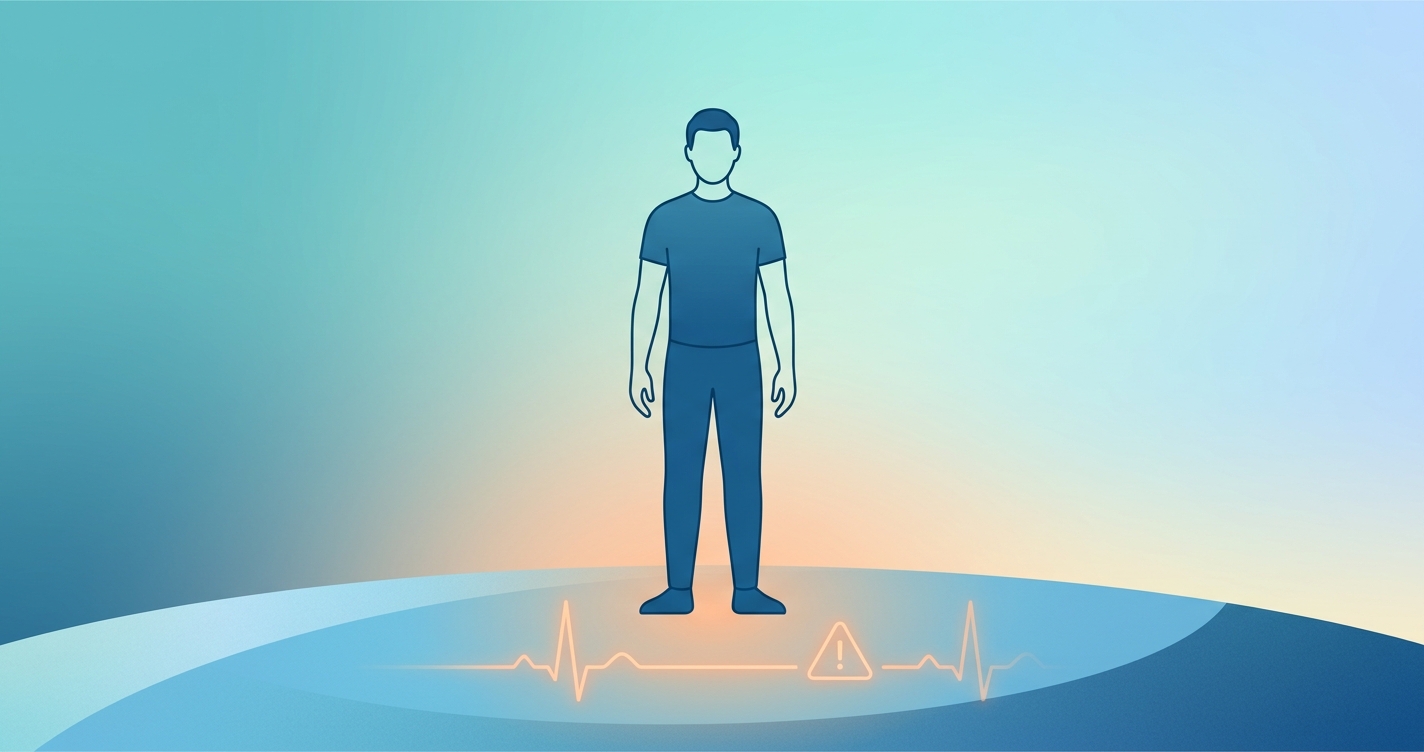
"I feel fine" is the most common reason employees give for skipping a workplace health check, and it is also the least reliable. The feeling of being healthy and the state of being healthy are not the same thing, and the gap between them is exactly where the most expensive chronic conditions take root. For employer health consultants tasked with selling the value of a wellness program, this is the central tension to resolve. The corporate wellness biometric screening importance argument does not rest on catching people who are obviously sick. It rests on the much larger population that looks well, performs well, and carries a measurable risk they cannot feel. Understanding why that group matters is the difference between a program that gets dismissed as a perk and one that gets defended as a clinical and financial necessity.
Among U.S. adults with hypertension, 40.8% are unaware they have it, according to CDC data covering August 2021 to August 2023. That is roughly one in five of all adults walking around with undiagnosed high blood pressure.
The corporate wellness biometric screening importance hiding in symptomless populations
The reason "I feel fine" fails as a health indicator is biological. The conditions that drive the majority of employer healthcare spending, including hypertension, type 2 diabetes, and high cholesterol, are largely asymptomatic in their early and middle stages. By the time a person feels symptoms, the disease has often progressed to a point where management is harder and more costly.
The CDC numbers make the scale concrete. Between August 2021 and August 2023, about 47.7% of U.S. adults had hypertension, and 40.8% of those did not know it. For diabetes, 4.5% of all adults had the disease without a diagnosis, representing 27.6% of everyone with diabetes. These are not edge cases. In a workforce of 1,000 employees, the math suggests dozens of people are carrying a serious cardiovascular or metabolic condition while reporting that they feel perfectly fine.
This is the core of the corporate wellness biometric screening importance case. A screening is not a confirmation tool for the visibly unwell. It is a detection tool for the invisibly at-risk, which is the much larger and more valuable group from both a health and a cost perspective.
The value to an employer breaks down into a few distinct categories:
- Early detection that moves a condition from emergency treatment to manageable maintenance
- A baseline measurement that lets future screenings show trends rather than isolated snapshots
- A trigger for engagement, where a borderline number motivates a behavior change before a diagnosis is needed
- Aggregate population data that helps benefits teams design plans around actual workforce risk
How a "healthy" employee compares to a screened employee
The practical difference between an employee who relies on how they feel and one who has recent biometric data is not subtle. The table below frames how the same person looks under each approach.
| Factor | "I feel fine" (unscreened) | Recently screened |
|---|---|---|
| Blood pressure awareness | Unknown until a crisis or routine doctor visit | Measured, with a clear number and category |
| Early-stage diabetes risk | Often invisible for years | Flagged via glucose or A1C indicators |
| Cholesterol status | Silent until cardiovascular event | Quantified and tracked over time |
| Motivation to act | Low, because nothing feels wrong | Higher, because a number provides a concrete target |
| Cost trajectory | Higher long-term, reactive care | Lower, preventive and managed care |
| Data for the employer | None | Anonymized aggregate risk profile |
The right column is not a sicker person. In most cases it is the same person with the same body. The only thing that changed is information, and information is what converts a silent risk into an addressable one.
Industry applications for employer health consultants
For consultants, the asymptomatic-risk argument is not just clinically sound. It reshapes how a wellness program is positioned, priced, and measured. A few applications matter most.
Reframing the participation conversation
Employees opt out of screening because they assume it is redundant. The consultant's job is to reframe the screening as a baseline, not a verdict. A first screening is most valuable not for what it finds today but for the trend line it starts. This reframing tends to lift participation among the healthy-feeling majority, which is precisely the group most programs fail to reach.
Designing around aggregate risk
When a screening reaches a broad slice of the workforce, including the people who feel fine, the resulting anonymized data gives benefits teams a real picture of population risk. That picture informs plan design, point-solution selection, and where to spend limited wellness dollars. A program that only screens the worried-well or the already-diagnosed produces a distorted dataset.
Lowering the friction that keeps healthy people away
The single biggest barrier for symptomless employees is inconvenience. If feeling fine is the reason to skip and an onsite event is the logistical excuse, removing the logistics matters. Digital screening models that let an employee complete a check from a phone, without booking a clinic visit or standing in a conference-room line, directly target the population that would otherwise never show up. This is where Circadify's approach of replacing onsite events with phone-based scans is aimed: capturing the healthy-feeling majority who decline traditional screening on convenience grounds.
Current research and evidence
The evidence base supports screening as a detection mechanism more strongly than it supports any single ROI figure. The CDC's diabetes and hypertension surveillance data, published in 2024 NCHS Data Briefs, establishes that undiagnosed chronic disease is widespread and concentrated among people not currently in care. That is the foundational fact behind preventive screening.
On the economic side, the picture is more nuanced and consultants should present it honestly. Organizations such as SHRM have documented that workplace wellness ROI varies widely and is difficult to isolate from other initiatives. The honest framing is that screening's value comes from early detection and risk identification, which set up downstream interventions, rather than from screening alone producing savings. The clinical logic is consistent: conditions caught early cost less to manage than conditions caught at the point of an emergency.
What the research does not support is the idea that feeling well is evidence of being well. The 40.8% unawareness rate for hypertension is, in effect, a measurement of how often the "I feel fine" assumption is wrong. For a consultant, that single statistic does more persuasive work than any ROI projection, because it speaks directly to the employee's own reasoning.
The future of preventive biometric screening
The direction of the field is toward lower-friction, higher-frequency measurement. The traditional model, a once-a-year fasting blood draw at an onsite event, was built for a workplace that no longer exists, with its in-office concentration and tolerance for a half-day disruption. As workforces spread across remote, hybrid, and deskless arrangements, the screening model that depended on physical presence reaches fewer of the people who need it most.
Three shifts are likely to define the next several years:
- A move from annual snapshots to more frequent check-ins, so trends become visible sooner
- Phone-based and contactless measurement that removes the convenience barrier for symptomless employees
- Tighter integration between screening results and the follow-up resources that turn a number into a behavior change
The unifying theme is reach. A screening program is only as good as the share of the workforce it actually touches, and the hardest segment to touch has always been the people who feel fine. The future of screening is essentially the future of reaching that group.
Frequently asked questions
If I feel healthy, what can a biometric screening actually tell me?
It can tell you whether the way you feel matches what your body is doing. Conditions like high blood pressure, elevated blood sugar, and high cholesterol are usually symptomless in their early stages. A screening provides measured numbers and a baseline you can track over time, which feeling fine cannot provide.
How common is undiagnosed chronic disease in a normal workforce?
More common than most people expect. CDC data for 2021 to 2023 found that 40.8% of adults with hypertension were unaware of it and 4.5% of all adults had undiagnosed diabetes. In a typical employee population, that translates to a meaningful number of people carrying serious risk without knowing.
Is a single screening enough?
A single screening is most valuable as a starting point. Its real power comes from establishing a baseline that future checks can be compared against, which is why lower-friction, more frequent screening models are gaining ground over the once-a-year event.
How can consultants get healthy-feeling employees to participate?
By reframing screening as a baseline rather than a test to pass, and by removing logistical friction. Phone-based screening that does not require a clinic visit tends to reach the convenience-driven non-participants that onsite events miss.
The asymptomatic-risk problem is not new, but the tools for solving it are changing fast. Circadify is addressing this space by replacing expensive onsite biometric events with phone-based scans designed to reach the employees who feel fine and would otherwise never participate. To see how that model captures the healthy-feeling majority, explore an enterprise wellness demo.