Building a Culture of Health With Technology: Where to Start
A practical look at how employers build a culture of health with technology, using data, leadership routines, and low-friction employee engagement.
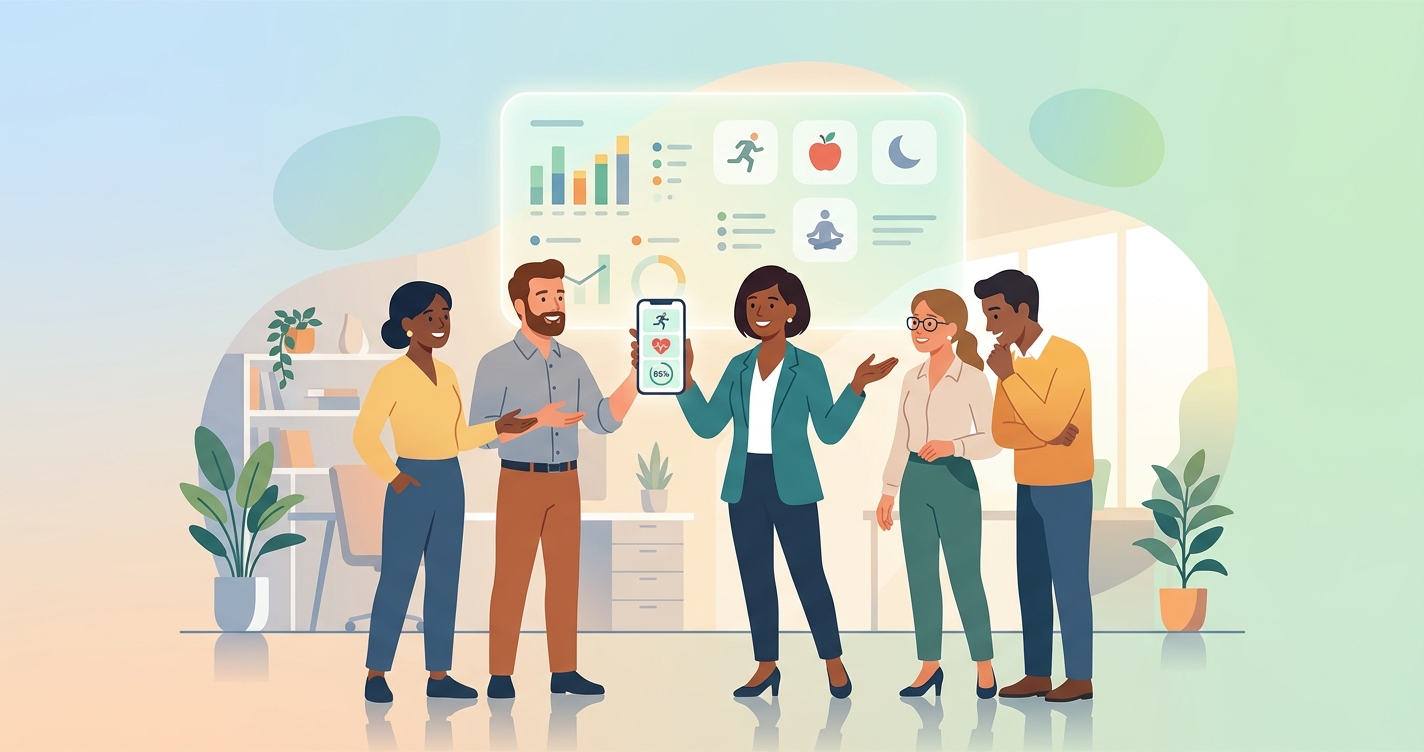
Building a culture of health with technology sounds straightforward until an employer actually tries to do it. Most companies do not fail because they lack apps, dashboards, or wellness vendors. They fail because employees experience wellness as an annual campaign instead of a normal part of work. The real question is not which platform to buy first. It is how to use technology to make healthy routines easier, more visible, and less dependent on one energetic HR leader. That distinction matters. Business Group on Health's 2025 Employer Well-being Strategy Survey found that employers are now treating well-being as a workforce-wide strategy rather than a side program, while Johns Hopkins researchers and Great Place To Work reported in 2024 that employee well-being in U.S. organizations has been slipping, especially for younger and rank-and-file workers. The gap between intention and daily experience is where most culture-of-health initiatives stall.
"CDC recommends three approaches—coordinated, systematic, and comprehensive—for creating a workplace health promotion program." — CDC Workplace Health Model, updated July 2024
Why culture of health technology workplace strategies usually break down
A culture of health is not built by sending more reminders. It is built when employees can see that health support is part of how the company operates: how benefits are communicated, how managers talk about workload, how screenings happen, and how fast people can act on the information they get.
That sounds obvious, but a lot of employer technology stacks still create friction at every step. One system handles benefits, another runs incentives, another hosts mental health resources, and biometric screening often sits outside all of them. Employees end up with too many logins and no clear reason to return after enrollment season.
The research keeps pointing in the same direction. Gallup's employee wellbeing guidance notes that organizations that prioritize wellbeing see less burnout, stronger engagement, and better retention. Mercer reported in its 2025 Health on Demand findings that employees whose benefits meet their needs are almost three times as likely to say their employer cares about them. In other words, culture is not just messaging. Employees infer culture from whether the tools actually work for them.
| Starting point | What employees experience | What technology should do | Likely outcome |
|---|---|---|---|
| Annual campaign only | Wellness feels episodic and optional | Deliver one-time screening and generic reminders | Short participation spike, then drop-off |
| Fragmented vendor stack | Multiple portals and repeated data entry | Connect benefits, screening, incentives, and reporting | Moderate adoption, uneven trust |
| Integrated health workflow | Health support appears in normal work routines | Reduce friction, personalize nudges, simplify follow-up | Higher repeat use and stronger engagement |
| Leadership-backed culture model | Employees see health reflected in policies and manager behavior | Surface population insights without adding burden | Best odds of sustained participation |
Where employers should actually start
The honest answer is smaller than most vendors would like. Start with one or two health moments that already matter to the business, then use technology to make those moments easier.
For most employers, those moments are:
- open enrollment
- annual or quarterly health screening
- return-to-work or high-stress seasonal periods
- manager check-ins tied to workload, absence, or burnout risk
If the first phase tries to solve every dimension of wellbeing at once, the program usually turns into a branding exercise. CDC's workplace health model is useful here because it does not begin with software. It begins with a coordinated, systematic, and comprehensive design. Technology comes after that, as infrastructure.
A good first-phase plan usually includes three pieces.
1. Make participation low-friction
If employees need to schedule an onsite event, travel to a clinic, or fill out long assessments before getting any value, adoption will skew toward the already-engaged population. That is one reason digital screening has become more attractive in corporate wellness. Phone-based or contactless screening shortens the distance between invitation and action.
2. Give managers a limited role, not a medical role
Managers influence culture, but employees do not want managers handling personal health details. The better model is giving managers signals about workload, burnout risk, and time-off behavior while leaving health data in protected systems.
3. Show employees something useful quickly
A culture initiative feels fake when employees contribute data and get nothing back except a PDF. The first experience should return a clear result, a next step, or an easy resource path within minutes.
What technology belongs in a real culture-of-health stack
Not every employer needs a sprawling platform. Most need a simpler architecture with clearer roles.
| Technology layer | Primary job | What to avoid |
|---|---|---|
| Screening tool | Capture baseline health signals with minimal friction | High-burden workflows that require clinics or event staffing |
| Benefits navigation | Show what support exists and who should use it | Static portals employees only visit once a year |
| Incentive engine | Reinforce repeat participation | Rewards so complex employees cannot tell how to qualify |
| Analytics/reporting | Help HR and finance see trends by population | Dashboards full of metrics with no decision path |
| Communication layer | Deliver timely, targeted outreach | Generic mass emails sent to everyone |
Employers often buy the analytics layer first because it looks sophisticated in a demo. In practice, the screening and navigation layers usually matter more early on. If you cannot create repeatable employee touchpoints, the reporting will just confirm that participation is low.
That is also where a lot of employers are rethinking biometric screening. In older models, screening was an event. In newer models, it becomes a recurring check-in that can fit around distributed workforces, shift schedules, and remote staff. We covered part of that shift in Year-Round Wellness vs Annual Screening: Which Drives Better Outcomes? and in How Benefits Brokers Differentiate With Digital Wellness.
Industry applications for culture-of-health technology
Distributed office and remote workforces
Remote and hybrid employers usually struggle with visibility. They know engagement matters, but they cannot rely on physical wellness events or break-room campaigns. Technology works best here when it creates short, repeatable digital touchpoints instead of long annual initiatives.
Manufacturing and deskless teams
Deskless populations have the opposite problem. Wellness tools often assume regular email access and long-form app engagement. For these teams, the winning model is short interactions, mobile-first workflows, and screening that does not require a separate clinic visit.
Self-insured employers
Self-insured employers care most about whether the program can identify risk early enough to shape claims. They usually need cleaner reporting, segmentation by population, and interventions aimed at the groups driving the highest spend.
Benefits brokers and consultants
For brokers, culture-of-health technology is less about branding and more about operational design. The broker that can connect screening, incentives, communications, and reporting has something more defensible than a generic wellness recommendation.
Current research and evidence
The research on employer wellness has become more honest over the past few years, which is helpful. Song and Katherine Baicker's 2019 randomized clinical trial in JAMA found improved self-reported health behaviors but no meaningful changes in clinical measures, spending, or employment outcomes after 18 months. That study is still worth citing because it exposed a common problem: participation alone is not the same thing as impact.
More recent employer research has pushed the conversation toward culture and operating design. In a 2025 Journal of Occupational and Environmental Medicine paper, Raymond Fabius, Michele Bildner, Neil Goldfarb, and David Kirshenbaum examined efforts to improve employer cultures of health and well-being, arguing that collaborative, organization-level models matter more than isolated wellness tactics.
Johns Hopkins researchers working with Great Place To Work reported in 2024 and 2025 that they analyzed data from 2,769 organizations and more than 1.3 million survey respondents, finding that workplace well-being had declined and that younger employees and frontline workers were hit especially hard. That is a useful reminder that a culture-of-health strategy cannot be built only for headquarters staff.
Business Group on Health's 2025 Employer Well-being Strategy Survey showed how far employer thinking has moved: well-being is now being managed as a broad workforce strategy, with mental health included by all surveyed employers in the executive summary. Mercer added another angle in its 2025 Health on Demand report, based on surveys of more than 2,000 U.S. employees and 18,384 employees across 17 markets globally: when benefits feel relevant and affordable, employees are much more likely to believe their employer actually cares.
A few practical takeaways keep repeating across these studies:
- culture matters more than campaign volume
- low-friction access matters more than vendor count
- workforce segmentation matters more than blanket programming
- leadership routines matter as much as the tool itself
The future of culture-of-health technology
I think employers are moving toward a simpler model than the market expected. Not less data, but less ceremony. Fewer once-a-year events. More lightweight check-ins. More integration with benefits, scheduling, and workforce operations. Less emphasis on getting every employee into a sprawling app ecosystem.
The likely winners will be employers that treat health technology the way they treat payroll or collaboration software: not as a special initiative, but as part of the operating environment. That means health support shows up when people need it, not only when HR launches a campaign.
It also means the screening layer becomes more flexible. Solutions like Circadify are part of that shift, especially for employers trying to reduce the cost and logistics of traditional biometric events while keeping health engagement accessible for remote and distributed teams.
Frequently asked questions
What does a culture of health with technology actually mean?
It means employees can access health support through normal work and benefits workflows instead of separate, occasional programs. Technology supports the culture when it reduces friction, returns useful information quickly, and connects screening, navigation, and follow-up.
Should employers start with a wellness platform or a screening tool?
Usually a screening or engagement touchpoint comes first, because it creates the recurring moment employees actually use. A platform without repeat interaction often turns into a portal nobody revisits.
How long does it take to build a workplace culture of health?
Most employers see early participation signals within one or two quarters, but culture change usually takes multiple plan cycles. The better way to judge progress is by repeat engagement, employee trust, and whether health workflows are becoming easier to use.
Can remote companies build a strong culture of health?
Yes, but remote employers need different mechanics. They cannot rely on onsite fairs or office visibility. They need mobile-first tools, lightweight screening, targeted communication, and benefit access that works without location-based events.