How to Integrate Digital Biometric Screening With Your Benefits Administration Platform
An analytical look at how to integrate digital biometric screening with your benefits administration platform, from data flow and eligibility logic to governance.
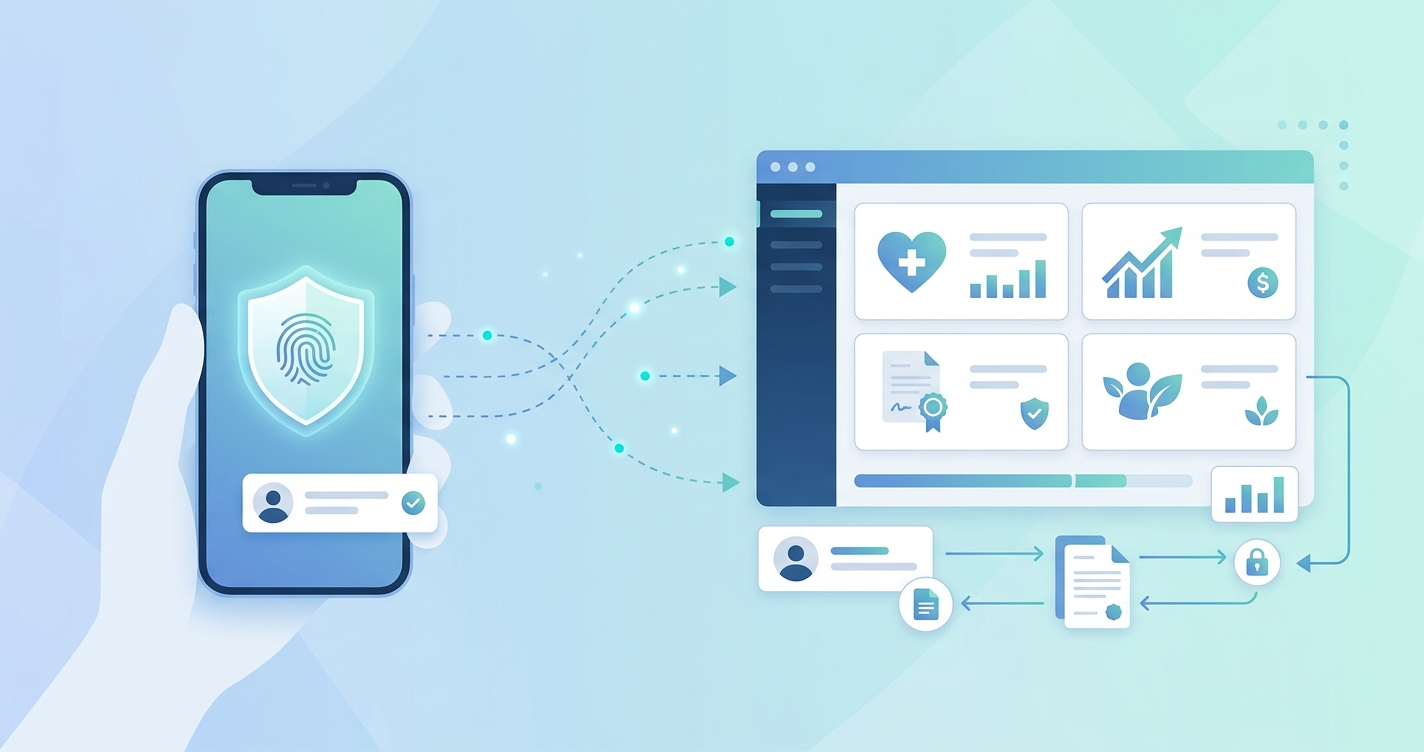
The market for employer screening is moving away from one-day events and toward connected workflows, which is why integrate biometric screening benefits administration platform has become a much more strategic question than it was even two years ago. Employers no longer want screening data to live in a vendor dashboard that HR cannot use. They want eligibility rules, incentive tracking, communications, and reporting to sit inside the same operating environment that already manages enrollment and benefits administration.
RAND researcher Soeren Mattke and colleagues found that fewer than half of employees in surveyed firms completed a clinical screening or health risk assessment, and one of the clearest facilitators of success was making wellness activities convenient and accessible. When screening data is integrated into the benefits administration workflow instead of separated from it, convenience stops being a feature and becomes infrastructure.
“Making wellness activities convenient and accessible for all employees” was one of RAND’s core facilitators of workplace wellness program success. — Soeren Mattke, Harry H. Liu, and colleagues, RAND, 2013
Why integrate biometric screening with your benefits administration platform
A benefits administration platform is already the system of record for enrollment status, plan eligibility, dependents, payroll deductions, and in many cases wellness incentive logic. Leaving digital biometric screening outside that system creates duplicate outreach, manual file transfers, and inconsistent reporting at exactly the moment employers are demanding cleaner program economics.
The integration question is really about operational design. Screening programs tend to break when four things happen at once:
- Eligibility files are outdated
- Incentive completion is tracked manually
- Employee communications are sent from multiple systems
- Results arrive too slowly to trigger follow-up action
Digital biometric screening works better when it behaves like a connected benefit event rather than an isolated vendor service. That means the platform needs to know who should be invited, what completion counts toward, which plan year the event belongs to, and how downstream reporting should be structured.
| Integration model | How data moves | HR workload | Employee experience | Reporting quality |
|---|---|---|---|---|
| Standalone screening vendor | CSV exports after completion | High | Fragmented | Weak |
| Nightly batch file integration | Scheduled uploads between systems | Moderate | Better, but delayed | Moderate |
| API-based integration | Eligibility and completion data sync continuously | Lower | More seamless | Strong |
| Platform-native screening workflow | Screening embedded directly in benefits journey | Lowest | Most seamless | Strongest |
The most important point is not that every employer needs a fully native implementation immediately. It is that disconnected screening increasingly looks like legacy program design.
The integration architecture employers are actually buying
Benefits leaders usually assume the problem is the biometric scan itself. In practice, the harder part is data orchestration. A viable integration usually has four layers.
1. Eligibility and identity resolution
The benefits administration platform determines who is eligible for screening, what employer group they belong to, and whether they qualify for an incentive. If identity matching is weak, every later step becomes unreliable.
For most employers, this means matching screening completions to a stable identifier already maintained in the benefits platform, such as employee ID, dependent ID, or a governed benefits eligibility key. The goal is not just authentication. The goal is clean attribution for incentives, audit trails, and renewal reporting.
2. Event and completion logic
The second layer is rules: what counts as completed, how often employees can participate, what deadlines apply, and whether spouses or dependents are included. This is where many wellness programs become expensive, because HR teams end up reconciling exceptions by hand.
A better design lets the screening platform send structured completion events back into the benefits administration platform. That can mean “completed screening,” “incomplete attempt,” “eligible but not started,” or “requires review,” depending on the employer’s policy design.
3. Incentive administration
RAND’s work on workplace wellness found that incentives were associated with higher completion, particularly above modest thresholds. But incentives only work at scale when they are administered consistently. If premium differentials, HSA contributions, gift cards, or wellness credits are managed outside the main benefits platform, the employer creates more friction than motivation.
This is why integration matters financially. The value is not simply that data moves faster. It is that the incentive can be triggered accurately within the system employees already use for benefits activity.
4. Reporting and downstream action
The final layer is reporting. Benefits teams need employer-level completion rates, broker-ready renewal summaries, and population views by location, job type, or plan. Care managers may also need segmented outreach lists.
The Office of the National Coordinator for Health Information Technology frames interoperability as the secure and seamless exchange of electronic health information among authorized users. In employer screening, that principle shows up in a simpler form: the screening signal has to reach the people and systems that can actually act on it.
What standards and governance make integration work
Not every benefits administration platform uses the same integration stack, but the design principles are becoming clearer. HL7 describes FHIR as a standard for exchanging healthcare information electronically and emphasizes structured, standardized data exchange between applications. That matters because employers increasingly expect digital health vendors to look less like file exporters and more like modern interoperable systems.
In practical terms, strong integration governance usually includes:
- A defined source of truth for eligibility
- A documented schema for completion events and status codes
- Consent language that matches employer and vendor responsibilities
- Role-based access controls for reporting and exports
- Audit logs for incentive-related changes
- Clear retention and deletion rules for screening data
Benefits administration teams do not need a massive interoperability program to benefit from these principles. They need predictable rules. When the data model is unclear, every exception turns into an email chain between HR, the broker, the screening vendor, and the platform administrator.
Industry applications across employer segments
Mid-market employers working through brokers
This is often the most practical use case. Mid-market employers want the engagement value of screening, but they usually lack a dedicated integration team. A broker-backed deployment works best when the screening vendor can plug into the employer’s existing benefits administration workflow without requiring a custom enterprise build.
Multi-location employers with annual incentive programs
Distributed employers struggle when screening is handled as an onsite event or spreadsheet process. Integration helps standardize invitation timing, incentive eligibility, and year-end reconciliation across locations. That is especially important when open enrollment, payroll timing, and wellness deadlines all interact.
Employers shifting toward year-round engagement
Integrated screening is not just about enrollment season. It also supports a broader transition from annual events to ongoing health engagement. Employers that want repeated touchpoints during the year need screening data to feed the same communications and incentives engine employees already recognize.
Population health and navigation partners
CMS continues to emphasize coordination and reduced silos in models such as ACO REACH, where the central challenge is that patients often receive care from multiple providers who do not communicate effectively. Employer screening programs face a smaller version of the same problem. If screening output does not move into the broader health engagement workflow, it becomes observation without coordination.
Current research and evidence
The RAND Workplace Wellness Programs Study by Soeren Mattke, Harry H. Liu, John P. Caloyeras, Christina Y. Huang, Kristin R. Van Busum, Dmitry Khodyakov, and Victoria Shier remains one of the clearest baseline studies for employer wellness operations. The authors reported that only 46% of employees in surveyed firms completed a clinical screening or health risk assessment, and they identified convenience, accessibility, and strong outreach as critical to participation.
Pew Research Center’s 2025 mobile adoption analysis found that 91% of U.S. adults own a smartphone. For benefits administrators, that statistic matters because it supports a screening model built around access through existing employee devices rather than special onsite infrastructure.
The Office of the National Coordinator for Health Information Technology continues to describe interoperability as the secure and seamless exchange of electronic health information among authorized users. That framing is highly relevant for benefits administration teams deciding whether screening data should live in separate dashboards or flow into governed employer systems.
HL7’s FHIR overview, developed through the standards work of the HL7 community led by figures including Grahame Grieve in FHIR’s early architecture, underscores why structured exchange has become the default expectation for modern digital health integrations. Even when a benefits platform does not consume full clinical resources directly, the underlying expectation is the same: clean, reusable data structures beat ad hoc files.
The future of benefits-platform-based screening
The next phase of employer screening will be defined less by measurement novelty and more by administrative fit. Employers are already asking whether a screening program can fit their enrollment timeline, incentive logic, mobile communications, and reporting stack without creating new manual work. That is a higher bar than simply asking whether a vendor offers screening.
Over time, the market is likely to split. One group of vendors will continue to sell standalone wellness experiences with export files attached. The other will behave like infrastructure partners that plug into benefits administration, identity, and engagement systems from the start. The second group is more aligned with where employer buying behavior is headed.
That is also why contactless options are gaining attention. When phone-based screening can be tied directly to benefit workflows, the program becomes easier to launch across remote, deskless, and multi-site workforces. Solutions like Circadify are part of that broader shift toward digital biometric screening that fits into existing employer systems rather than sitting outside them. For a related cost lens, see our analysis of phone-based biometric screening vs onsite health fairs and what continuous health engagement looks like beyond annual screening.
Frequently Asked Questions
What is the main reason to integrate digital biometric screening with a benefits administration platform?
The main reason is operational consistency. Integration connects eligibility, completion tracking, incentives, and reporting so HR teams do not have to reconcile screening activity manually across multiple systems.
Do employers need APIs to make this work?
Not always. Batch files can work for simpler deployments, especially in the mid-market. But API-based integrations usually provide faster completion updates, fewer reconciliation problems, and a better employee experience.
What data should flow back into the benefits platform?
In most cases, employers need completion status, eligibility matching, participation timestamps, and any incentive-triggering event data. Highly sensitive clinical details often do not need to flow into the benefits administration layer unless there is a clear governance reason.
Is integration mainly an HR project or a technology project?
It is both, but the best owners are usually cross-functional. HR defines the incentive and employee experience, benefits operations manages workflow requirements, and IT or platform teams make sure identity, security, and reporting rules are implemented correctly.