What Is Continuous Health Engagement? Moving Beyond Annual Screenings
What continuous health engagement means for employers, and why many teams are moving beyond annual screenings toward lower-friction, year-round touchpoints.
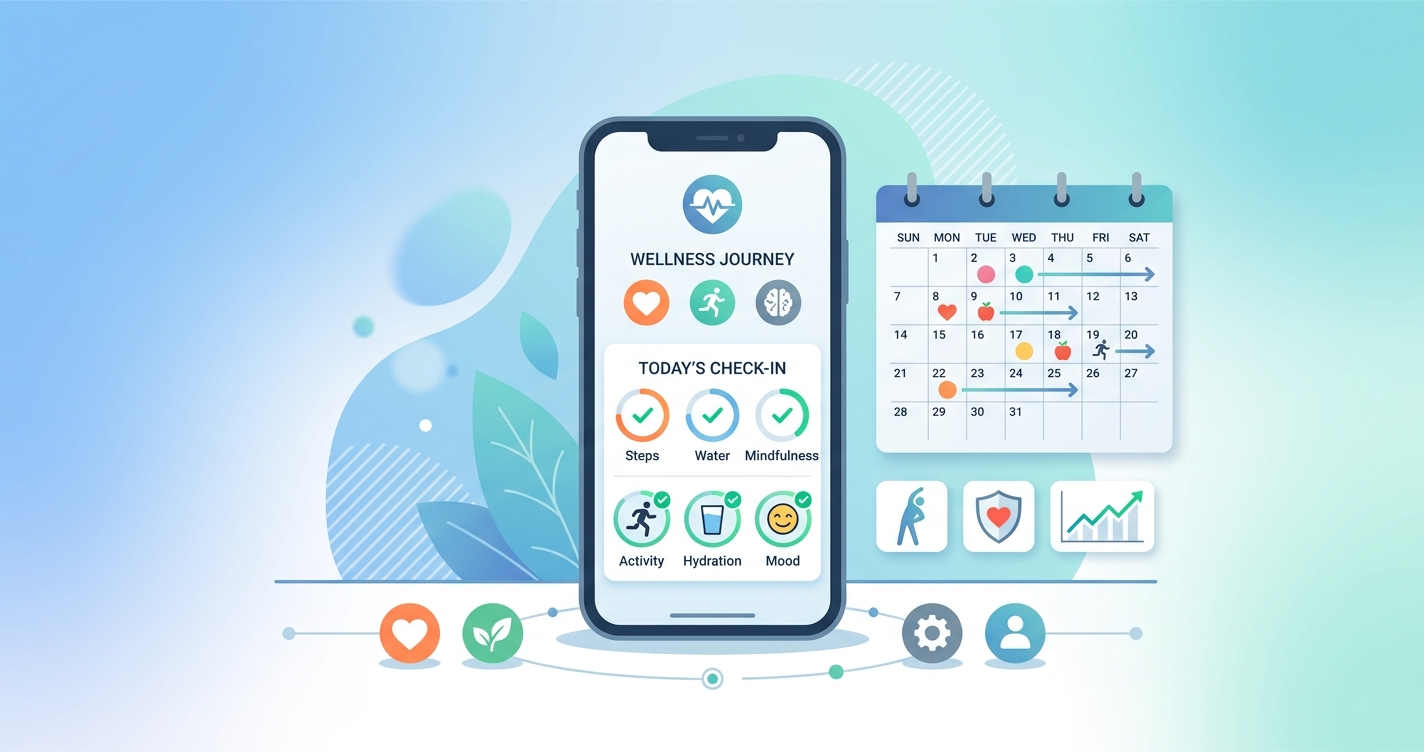
What is continuous health engagement? In plain English, it is the shift away from treating employee health as a once-a-year event. Instead of asking workers to show up for an annual biometric screening, fill out a risk assessment, and then disappear until next year, employers create smaller, repeatable touchpoints across the year. That sounds simple, but it changes the economics and the psychology of workplace wellness. RAND's workplace wellness study found that fewer than half of employees in surveyed firms completed clinical screening or a health risk assessment at all. Once a program becomes episodic, employers get a snapshot, not a relationship.
That is the core problem continuous health engagement is trying to solve. Annual screenings can identify risk. They are much worse at keeping health on the calendar after the event ends. And when engagement drops, follow-up drops with it.
"We found significant effects on health beliefs and self-reported behaviors, but no significant effects on clinical measures of health, health care spending, or employment outcomes after 18 months." — Zirui Song and Katherine Baicker, JAMA, 2019
Continuous health engagement means more than sending more reminders
Some employers hear the phrase and assume it means more email campaigns, more app notifications, or more wellness content. That misses the point. Continuous health engagement is really about frequency, friction, and relevance.
A useful definition looks like this: employees have recurring opportunities to check in on health, receive something useful back quickly, and take the next step without needing an onsite event or a major time commitment. The CDC's workplace health model, updated in July 2024, recommends coordinated, systematic, and comprehensive approaches. That wording matters because it points to a program design issue, not just a communications issue.
| Model | What happens | Employee experience | Employer value | Main weakness |
|---|---|---|---|---|
| Annual screening only | One event each year with results delivered later | High effort, low frequency | Baseline risk snapshot | Little momentum after the event |
| Quarterly engagement model | Short recurring check-ins through the year | Lower effort, more routine | Trend data and earlier outreach | Needs cleaner operational follow-up |
| Continuous health engagement | Screening, nudges, benefit navigation, and follow-up tied together | Health support feels ongoing, not episodic | Better visibility into participation and risk movement | Requires integration across vendors and teams |
| High-intensity care management | Ongoing coaching for identified high-risk groups | High-touch for a smaller population | Strongest fit for chronic condition management | Too expensive for broad deployment |
The difference is not just cadence. It is whether the employer can reduce the distance between "you should do something about your health" and "here is something easy to do right now."
A lot of wellness programs still fail on that point. They ask for too much effort too early, and then they wonder why only the already-motivated employees keep showing up.
Why annual screenings are no longer enough on their own
Annual screenings still have value. They catch undiagnosed hypertension, flag elevated glucose, and give employers a population-level baseline. I would not frame this as annual screenings being obsolete. The problem is that annual screenings are a thin engagement layer.
The RAND final report remains useful here because it separates participation from impact. The researchers found that around 46% of employees in surveyed firms underwent clinical screening or completed a health risk assessment. Even when incentives improved participation, employers were still dealing with an incomplete picture of the workforce.
The Illinois Workplace Wellness Study led by Damon Jones, David Molitor, and Julian Reif pushed the conversation further. Their randomized study found that wellness programs increased screening rates, but they did not produce detectable changes in medical spending, productivity, or many clinical outcomes over the study period. That does not mean engagement does not matter. It means the old model often confused activity with change.
Continuous health engagement is an attempt to build what annual screening lacks:
- repeated contact instead of a single annual event
- trend data instead of one point-in-time reading
- easier follow-up after an elevated result
- more chances to connect benefits, coaching, or care navigation
- less dependence on one big onsite logistics exercise
That last point matters more than vendors usually admit. Onsite screening days create drama and visibility, but they also create scheduling headaches, privacy concerns, and large participation swings by location.
What continuous health engagement looks like in practice
In practice, continuous health engagement usually does not mean constant monitoring. Most employers are not trying to turn wellness into surveillance, and if they do, employees will reject it fast.
The better model is lighter than that. It often includes recurring health check-ins tied to moments when employees are already paying attention: open enrollment, return-to-work periods, quarterly well-being campaigns, care management outreach, or seasonal stress periods.
A sensible program often includes:
- a low-friction screening method employees can access without traveling
- fast feedback so the interaction feels useful
- segmentation so follow-up goes to the right population
- a clear handoff to benefits, PCP follow-up, or condition-specific support
- reporting that helps HR, brokers, and benefits leaders see whether participation holds up over time
Gallup's 2026 State of the Global Workplace report adds context from outside wellness itself. Global employee engagement dropped to 20%, down from 23% in 2022, and Gallup estimated that low engagement cost the world economy about $10 trillion in lost productivity. Health engagement is not the same thing as job engagement, obviously. Still, employers are operating in an environment where attention is fragmented and workers are less inclined to participate in anything that feels abstract or burdensome. That is another reason the annual one-and-done model struggles.
For self-insured employers
Self-insured employers tend to care most about whether engagement creates earlier visibility into avoidable claims risk. They usually do not need more generic wellness content. They need a reliable way to spot which groups may need follow-up before costs spike.
For benefits brokers and consultants
For brokers, continuous health engagement is partly a positioning issue. It gives them a way to talk about year-round value instead of offering a screening event and disappearing until renewal season.
For distributed and remote teams
Remote work makes the old screening-event model feel increasingly dated. If the workforce is split across states, shifts, and home offices, a program built around one annual event becomes harder to justify.
Current research and evidence
The evidence on workplace wellness is a little uncomfortable, which is exactly why employers should read it closely.
Zirui Song and Katherine Baicker reported in JAMA in 2019 that a workplace wellness program improved some self-reported behaviors and health beliefs, but not clinical measures, healthcare spending, or employment outcomes after 18 months. That finding challenged the idea that offering a broad wellness program automatically changes the numbers that finance leaders care about.
Damon Jones, David Molitor, and Julian Reif reached a similar conclusion in the Illinois Workplace Wellness Study. The program increased screening participation, but measurable downstream effects were limited during the study window. Screening uptake improved. Hard outcomes mostly did not move.
RAND's workplace wellness report helps explain why. It found that employee uptake remained limited, with fewer than half of employees completing clinical screening or health risk assessment in surveyed firms. If the engagement layer is thin, the outcome layer will usually be thin too.
The CDC's 2024 workplace health model offers a more durable framework than many vendor playbooks. It argues for coordinated, systematic, and comprehensive program design, and notes that combining occupational safety and health efforts with health promotion can increase participation and effectiveness.
Put those sources together and a practical conclusion emerges: employers should stop asking whether a wellness program exists and start asking whether engagement can repeat often enough to support follow-up.
The future of continuous health engagement
I think the future here is less theatrical and more operational. Fewer health fairs. Fewer once-a-year campaigns. More short check-ins that fit into normal work and benefits workflows.
That does not mean every employer needs a sprawling platform. It means the engagement moment itself has to get easier. If a health check takes too long, requires travel, or produces no immediate value, participation will cluster among the same motivated employees and the population signal will stay weak.
That is why digital screening is getting so much attention in employer health strategy. When a basic health interaction can happen through a phone instead of an onsite event, the employer can shift from annual collection to year-round engagement. We have looked at parts of that transition in Year-Round Wellness vs Annual Screening: Which Drives Better Outcomes? and How to Run Biometric Screening for a Fully Remote Workforce.
Solutions like Circadify sit in that broader shift. The interesting part is not that employers can digitize a screening event. It is that they can turn screening into a repeatable touchpoint without recreating the cost and logistics of onsite programs.
Frequently asked questions
What is continuous health engagement in employer wellness?
It is a year-round model that gives employees recurring, lower-friction ways to check in on health instead of relying on one annual screening event. The goal is to improve follow-up, trend visibility, and ongoing participation.
Does continuous health engagement replace annual biometric screening?
Not necessarily. Many employers will still use annual screening as a baseline. The difference is that they add smaller touchpoints throughout the year so health does not disappear after the event.
Why do employers move beyond annual screenings?
Because annual screenings are good at producing a snapshot but weaker at sustaining action. Employers increasingly want more frequent engagement, easier follow-up, and less dependence on onsite logistics.
Is continuous health engagement only for large self-insured employers?
No. Large self-insured employers may feel the financial case more directly, but smaller employers, brokers, and distributed workforces also benefit from lower-friction, repeatable engagement models.