How Taft-Hartley Plans Use Digital Wellness to Engage Union Members
A research-based analysis of how Taft-Hartley plans use digital wellness to engage union members across eligibility, incentives, screening access, and year-round outreach.
For Taft-Hartley funds, engagement is rarely just a communications problem. It is an operating problem. Union members often work across job sites, move between employers, and interact with benefits through a mix of local trust, plan rules, and seasonal eligibility windows. That is why taft hartley digital wellness union members has become a serious strategic topic for fund administrators and labor health consultants. A wellness program that works for a single-campus employer can fall apart fast in a jointly managed plan environment.
The good news is that Taft-Hartley plans are unusually well positioned to benefit from digital wellness when the program design respects how union members actually use benefits. A phone-based screening workflow, simpler incentive administration, and better year-round outreach can reduce the friction that has historically made participation uneven across locations and crafts.
RAND researcher Soeren Mattke and colleagues found that convenience and accessibility are core drivers of wellness participation. For Taft-Hartley plans, that point lands hard: if a member has to be in one place at one time, completion usually drops.
Why Taft-Hartley digital wellness looks different from a standard employer program
A Taft-Hartley plan is not just an employer wellness program with a union label on it. The governance model is different, the trust model is different, and the member journey is often more fragmented. Eligibility can shift with hours worked, covered lives may be spread across contractors and regions, and communications may need to pass through both plan channels and labor channels.
That means digital wellness works best when it does four things well:
- reaches members outside a central worksite
- makes screening available without event-day logistics
- connects incentives to plan administration cleanly
- gives trustees and administrators reporting they can actually use
The comparison below helps explain why this matters.
| Program design choice | Traditional union health fair model | Digital wellness model | Likely effect on member engagement |
|---|---|---|---|
| Access | In-person, fixed place and time | Phone-based or distributed access windows | Higher reach across mobile workforces |
| Administration | Event coordination and manual follow-up | Platform workflow and status tracking | Lower plan-side labor |
| Incentives | Often delayed or manually reconciled | Easier to tie to plan rules and reward logic | More trust in the process |
| Repeat outreach | Usually annual | Can continue year-round | Better ongoing engagement |
| Coverage across job sites | Hard to standardize | Easier to scale across contractors and regions | More consistent participation |
| Reporting | Batch data after event close | Faster completion and segment reporting | Better trustee visibility |
Where digital wellness reduces friction for union members
The central advantage is access. Many union members do not sit at a desk, do not share the same shift, and do not live near the same clinic or benefit office. A traditional biometric event can work for some of the population, but it often misses members with travel schedules, rotating shifts, or inconsistent location patterns.
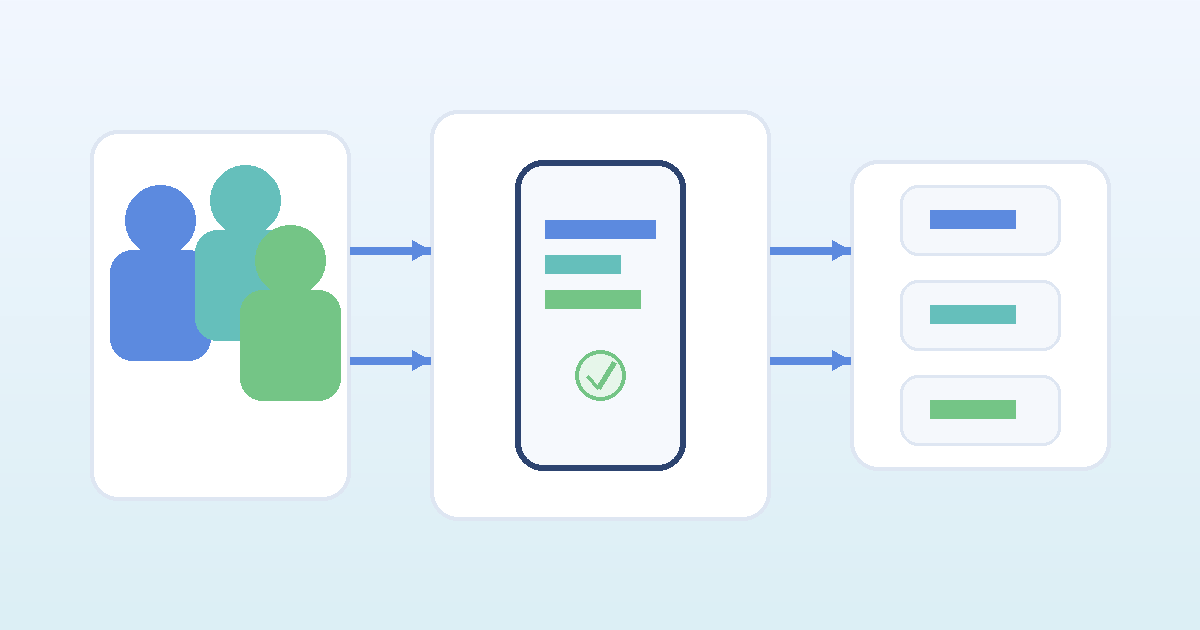
Digital wellness changes that equation by shifting the program from an event to a workflow. Instead of asking the member to show up where the program is, the program meets the member where they already are.
That matters because wellness participation is highly sensitive to hassle. In the Illinois Workplace Wellness Study, Damon Jones, David Molitor, and Julian Reif showed that even when programs are free and incentivized, real participation depends on how easy the experience feels. Taft-Hartley plans should read that as a warning against assuming members will tolerate extra steps just because the benefit exists.
A digital workflow can also reduce a quieter problem: distrust created by delayed rewards. If the member completes a screening and the incentive never shows up, or shows up months later, confidence in the program drops. Clean status tracking matters as much as the screening experience itself.
Industry applications for Taft-Hartley funds
Multi-employer plans with dispersed worksites
This is the cleanest fit. Construction, transportation, and trade-related funds often manage populations that do not gather at one headquarters. Phone-based digital wellness allows a fund to support participation without recreating the cost of onsite events across every geography.
Joint labor-management engagement campaigns
Taft-Hartley plans also have a communication advantage when programs are designed well. Member outreach can come through plan administrators, labor leaders, steward networks, and vendor campaigns. That layered outreach often works better when the call to action is simple and portable.
Year-round benefits education
A lot of wellness activity in union plans still clusters around annual screening windows. Digital programs make it easier to extend engagement beyond the annual push. That can support repeat reminders, risk-based follow-up, and broader benefit education instead of a once-a-year spike in attention.
Current research and evidence
The academic literature is not full of Taft-Hartley-specific randomized trials, but the evidence from wellness and engagement research still points in a useful direction.
Damon Jones at the University of Chicago, David Molitor at the University of Illinois Urbana-Champaign, and Julian Reif at McMaster University published their workplace wellness findings in the Quarterly Journal of Economics in 2019. Their study is often cited for showing modest downstream economic effects, but the operational lesson is just as important: participation is fragile. Program friction has a real cost.
Zirui Song of Harvard Medical School, Kevin Volpp of the University of Pennsylvania, and Katherine Baicker of the University of Chicago reported in JAMA in 2019 that screening and health survey participation in intervention worksites landed in roughly the 36% to 45% range. For Taft-Hartley plans, that is a useful benchmark. If standard employer programs already struggle to get broad completion, plans serving distributed union populations need delivery models that remove even more friction.
RAND's employer wellness work, led by Soeren Mattke, also emphasized convenience and accessibility as key drivers of uptake. That is one reason digital screening and digital outreach fit the Taft-Hartley environment. The more the plan can reduce travel, scheduling, and duplicate paperwork, the stronger the odds that members will actually finish the process.
There is also a broader market shift worth watching. Business Group on Health and Mercer have both reported that employers increasingly want year-round, digitally managed wellbeing programs rather than one-time screening events. Taft-Hartley plans face different governance realities than large employers, but the direction is similar. The old event-heavy model is expensive to repeat and hard to scale.
The future of Taft-Hartley digital wellness
The most interesting part is not the technology itself. It is the chance to design a better member experience.
The funds likely to get the most out of digital wellness are the ones that keep the program simple: clear eligibility, easy access, visible incentives, and reporting that trustees can trust. They will probably use digital tools to widen reach, not to replace every in-person touchpoint. In some cases, a hybrid model will make the most sense: trusted union-facing communications and occasional onsite moments, backed by phone-based screening and digital follow-up the rest of the year.
That hybrid approach fits how union members often engage with benefits anyway. Trust is local. Access has to be portable. Administration has to be clean.
Frequently Asked Questions
Why are Taft-Hartley plans a good fit for digital wellness?
Because many union members are geographically dispersed, mobile, or shift-based. A digital model reduces the need to gather everyone for one event and makes screening easier to complete.
Do Taft-Hartley plans still need onsite events?
Sometimes yes. Onsite events can still help with awareness and trust-building. But digital wellness usually works better for broader reach, year-round access, and lower administrative burden.
What is the biggest operational risk in a digital wellness rollout?
Poor incentive administration. If members complete the program but do not see the reward or plan credit handled correctly, confidence drops quickly.
What should trustees and administrators measure first?
Start with completion rate, participation by member segment or geography, time-to-incentive, and repeat engagement. Those metrics tell you whether the workflow is actually working.
Taft-Hartley funds do not need a flashier wellness portal. They need a program members can access easily and administrators can run without a pile of manual cleanup. That is why digital screening and year-round engagement tools are getting more attention in this space. For plans exploring that shift, solutions like Circadify fit the broader move toward phone-based screening and simpler benefits engagement. For related reading, see our analysis of how to eliminate onsite biometric screening events and year-round wellness vs annual screening.