Can my company really tell if I'm healthy from a phone check?
Can a company wellness phone check really tell if you're healthy? Here’s what the research says about accuracy, screening limits, privacy, and employer use.
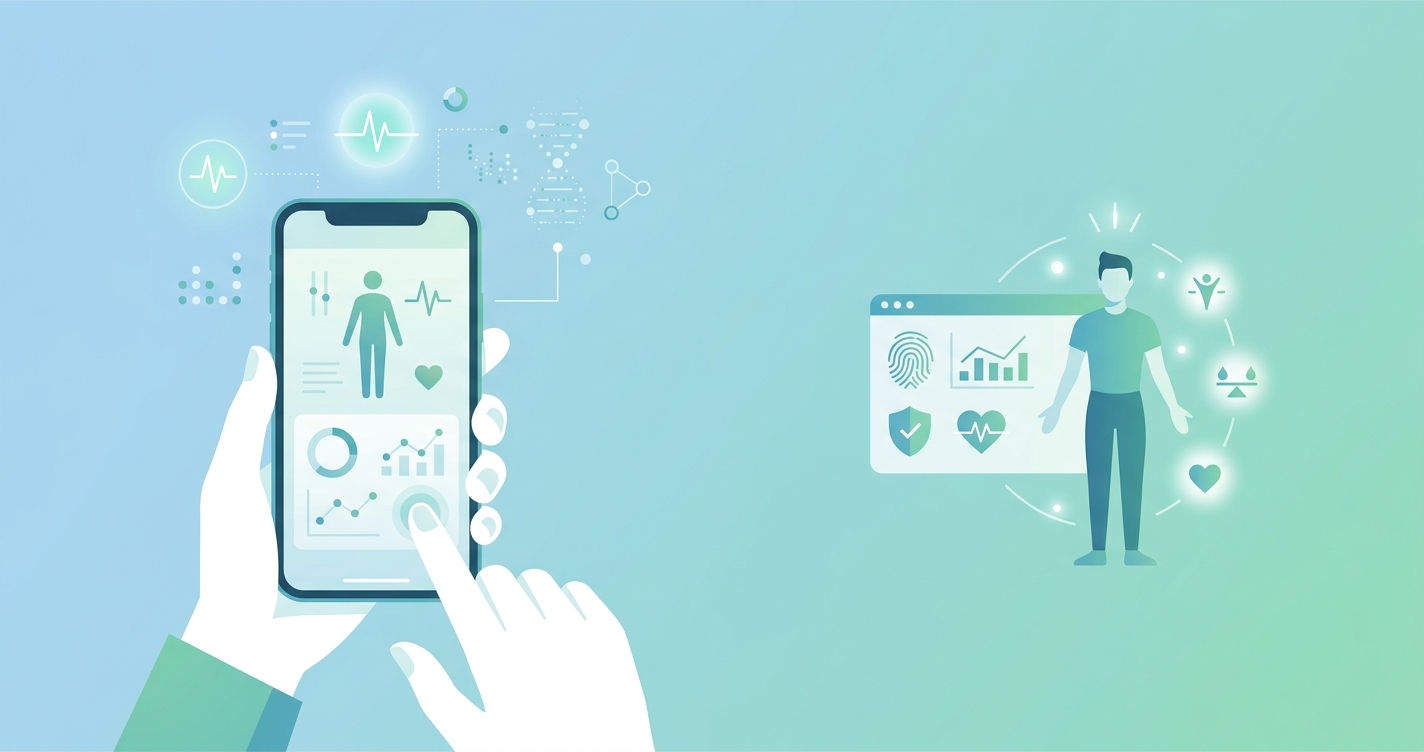
Can a company wellness phone check really tell if you are healthy? Not in the broad, final sense most people mean when they ask that question. A phone-based wellness screen can estimate a few physiological signals and help an employer run a screening program without sending everyone to an onsite event. What it cannot do is sum up your whole health in one neat verdict. That gap matters, because employees often hear "phone check" and imagine either magic or surveillance. The truth is less dramatic and more useful: it is usually a screening tool, not a diagnosis.
"After 18 months, we found no significant effects of the workplace wellness program on clinical outcomes, medical spending, or utilization." That was the conclusion of Katherine Baicker and Zirui Song's 2019 randomized clinical trial in JAMA, which followed 32,974 employees across 160 worksites.
Company wellness phone check accuracy depends on what the check is actually trying to measure
The first thing to clear up is the word healthy. Employers and employees often use it like it means one thing. It doesn't.
A screening tool may be used to estimate heart rate, blood pressure trends, stress-related signals, or other markers tied to a wellness workflow. That is very different from answering a larger question like whether you are healthy overall, whether you have a disease, or whether you need treatment.
That distinction gets lost in workplace communication all the time. If HR says a phone check helps assess employee health, employees understandably hear something bigger than what the tool is usually built to do.
| Question | What a phone-based wellness check may do | What it usually cannot do on its own |
|---|---|---|
| Can it collect useful health-related signals? | Yes, it may estimate a limited set of physiological markers during a screening session | It cannot capture every risk factor that matters to your health |
| Can it tell if you are "healthy" overall? | Only in a very narrow screening sense | It cannot replace a clinician's assessment or a full medical workup |
| Can it support a workplace wellness program? | Yes, especially when employers want a remote or year-round screening option | It cannot guarantee better outcomes just because more people complete the screen |
| Can it make privacy concerns disappear? | No | Employees still need clear answers about data use, storage, and access |
That is why the most honest answer to the title question is: your company may be able to learn something from a phone check, but not everything, and not enough to collapse your health into a single yes-or-no label.
Why employers are interested in phone checks in the first place
Usually this is less about futuristic health technology and more about logistics.
KFF's 2024 Employer Health Benefits Survey found that 44% of large firms offering health benefits gave workers the opportunity to complete a biometric screening, and 65% of those firms used incentives or penalties to encourage participation. That tells you two things. First, screening is already common. Second, participation is hard enough that employers keep reaching for new formats.
Traditional screening events are expensive, narrow, and annoying to operate. Someone has to staff them, schedule them, and hope employees show up. A phone-based workflow looks attractive because it can be offered over a longer window and can reach remote, hybrid, and deskless workers more easily.
If you want the employer-side view of that shift, we covered it in why is my employer asking me to scan my face for wellness screening? and in our earlier look at year-round wellness vs annual screening.
What current research says about phone-based screening technology
The research story here is promising, but it is not a blank check.
In 2024, University of Pittsburgh researcher Dr. Ervin Sejdić and colleagues described a cuffless blood pressure approach built around a smartphone app and finger clip, reported through Nature Communications coverage and university press materials. The point was not that every employer phone check is now a medical-grade exam. The point was that phone-linked vital-sign measurement is moving from concept to serious engineering work.
A separate 2024 review in Frontiers in Digital Health by Mena, Castaneda, and co-authors looked at remote photoplethysmography, the camera-based method often discussed in phone-based vital sign screening. Their review argued that consumer-grade cameras can estimate some signals reasonably well in controlled conditions, especially heart rate, while blood pressure and other measures still need more validation in broader real-world use.
That cautious tone is worth keeping. It is easy to jump from "researchers can estimate a signal with a camera" to "your employer now knows whether you're healthy." Those are not the same claim.
A practical way to think about it:
- some measures are easier to estimate than others
- controlled study conditions are not the same as real workplaces
- screening value is not the same as diagnostic certainty
- good participation does not automatically produce better health outcomes
The JAMA trial from Baicker and Song is important here because it pulls the conversation back to outcomes. Even when wellness programs increase engagement, the evidence on major clinical and spending effects has been mixed.
What employees usually worry about is not just accuracy
Accuracy is the headline question. Trust is the real one.
If your employer asks you to do a phone check, you are probably wondering about three things at once:
- what the phone is measuring
- who gets the data
- whether the program is really voluntary
That concern is not overblown. SHRM has noted that workplace wellness programs can raise difficult privacy questions because not every program sits under the same HIPAA structure employees expect from a hospital or doctor visit. KFF Health News has reported similar concerns, especially when wellness data is managed through employer-sponsored programs that do not feel medically distant enough from the workplace.
A 2024 FAccT review by Ezra Awumey, Sauvik Das, and Jodi Forlizzi examined 129 papers on biometric monitoring in the workplace and found recurring socio-technical harms around surveillance, inference, and worker autonomy. That review was not focused only on wellness phone checks, but it captured the bigger mood employees bring into these programs: people worry that data collected for one purpose can drift into another.
| Employee concern | Why it comes up in phone-based wellness programs | What a fair employer should explain |
|---|---|---|
| "Can they tell everything about my health?" | Marketing language around digital screening can sound broader than the actual measurement scope | Which signals are measured, and which are not |
| "Is this private?" | Wellness data may pass through vendors, benefit administrators, or plan workflows | Who stores the data, who sees it, and how long it is retained |
| "Can this affect my job?" | Employees often blur the line between wellness administration and employment decisions | Whether individual results are shared, aggregated, or separated from HR decisions |
| "Do I really have a choice?" | Incentives and premium differentials can feel like pressure | Whether there is an alternative path and what happens if someone opts out |
That last point matters more than some buyers admit. A phone check can be technically impressive and still fail if employees do not trust the setup.
Industry applications
Employers with remote and hybrid workforces
For a scattered workforce, a phone-based check solves a real operational problem. It gives the employer one workflow instead of twenty local screening events.
Benefits teams trying to reduce event costs
Onsite screenings cost money in staffing, scheduling, travel, and lost employee time. Phone-first options are attractive because they move some of that process into self-service.
Wellness programs trying to increase completion rates
This may be the strongest case. Convenience changes participation. A worker who will not drive to a one-day screening event may still complete a phone check during open enrollment week.
Brokers and consultants evaluating wellness vendors
For benefits advisors, the question is rarely "is this magic?" It is usually whether a digital screening model is credible enough, simple enough, and trusted enough to replace part of an older onsite model.
Current research and evidence
Three pieces of evidence are especially useful for employees trying to interpret the hype.
First, the underlying technology is real. Researchers continue to publish work on camera-based and phone-linked measurement of vital signs. Dr. Ervin Sejdić's 2024 University of Pittsburgh work is one example of how cuffless and app-based measurement is advancing.
Second, the evidence is stronger for some signals than for others. Reviews of remote photoplethysmography literature have generally been more confident about heart-rate measurement than about broad claims that a camera can fully assess overall health or replace conventional evaluation for every marker.
Third, workplace wellness outcomes are still mixed. In JAMA, Katherine Baicker and Zirui Song found that a large workplace wellness program improved some behaviors but did not produce significant changes in clinical outcomes or medical spending after 18 months. That does not mean screening is useless. It means the leap from "we can measure something" to "we are definitely making people healthier" still needs proof.
I think that is the healthiest way to read a company wellness phone check. Treat it as a screening layer and an engagement tool. Do not treat it as a final verdict on your health.
The future of company wellness phone checks
Phone-based wellness checks are probably not going away. Employers like the economics, distributed workforces make the old event model harder to defend, and the underlying measurement technology is improving.
The bigger question is what kind of program employers build around the tool.
If the rollout is clear about limits, keeps the language modest, and answers employee privacy questions directly, phone-based screening can feel like a practical update to an old process. If the rollout sounds like the employer can now see straight through you from a smartphone camera, people will resist it, and honestly, they should.
Circadify is one of the companies working in this phone-based screening category for employers and health systems. If you are evaluating where workplace wellness is heading, you can learn more at circadify.com.
Frequently Asked Questions
Can a company phone check diagnose a medical condition?
Usually no. A wellness phone check is generally positioned as a screening tool, not a diagnosis. It may estimate limited physiological signals, but it does not replace a clinician's evaluation.
Is a phone-based wellness check accurate enough to judge my overall health?
Not really in that broad sense. Research supports limited measurement uses more than sweeping claims about total health. Some signals are easier to estimate than others, and real-world conditions vary.
Why would my employer use a phone check instead of an onsite screening?
Mostly because it is easier to deploy across remote, hybrid, and multi-site workforces. It can also reduce event costs and give employees a longer window to participate.
Should I worry about privacy in a workplace wellness phone check?
Yes, it is reasonable to ask questions. You should know what is being measured, who gets the data, whether results are individual or aggregated, how long the data is stored, and whether there is an alternative to participation.